



Navigating the intricate process of document translation certificate attestation can be daunting for any employer in the Gulf Cooperation Council region. Moreover, understanding the associated costs and fee structures is crucial for budgeting and compliance. This comprehensive guide demystifies the entire procedure. Specifically, we break down the notary and embassy legalization fee structures. Therefore, you can plan your international recruitment or business setup with confidence and precision.
The GCC’s strict regulatory environment demands absolute accuracy in document authentication. Educational certificates, marriage licenses, commercial agreements, and personal identification all require proper legalization. Consequently, failure to comply results in visa rejections, contract delays, and legal complications. Furthermore, each country within the GCC—UAE, Saudi Arabia, Qatar, Kuwait, Oman, and Bahrain—has nuanced requirements. Understanding these variations is the first step toward seamless processing.
At Allianze HR Consultancy, we’ve successfully placed 10,000+ professionals across UAE, Saudi Arabia, Qatar, and Kuwait. Furthermore, our 5+ years of GCC expertise supports clients from 50+ countries. Moreover, our Ministry of External Affairs (India) RA license ensures compliance. Therefore, contact our recruitment specialists for expert guidance on your document legalization needs. We streamline the entire attestation journey, from translation to final embassy stamping.
Understanding GCC Document Legalization Requirements
Document legalization is a multi-step verification process. It authenticates the validity of foreign documents for use in another country. First, the document must be translated by a certified professional if not in Arabic or English. Next, a series of attestations from various authorities follows. These typically include notary public, home country government departments, and the GCC embassy.
Each GCC nation mandates this process for legal certainty. For instance, employment contracts require attestation for work visa issuance. Similarly, educational degrees need verification for professional license applications. Additionally, commercial documents like powers of attorney must be legalized for business operations. The International Labour Organization standards emphasize proper documentation for worker protection.
- Educational Certificates (Degrees, Diplomas, Transcripts)
- Personal Documents (Birth/Marriage Certificates, Police Clearance)
- Commercial Papers (Company Registrations, MOAs, Invoices)
- Legal Documents (Court Orders, Affidavits, Powers of Attorney)
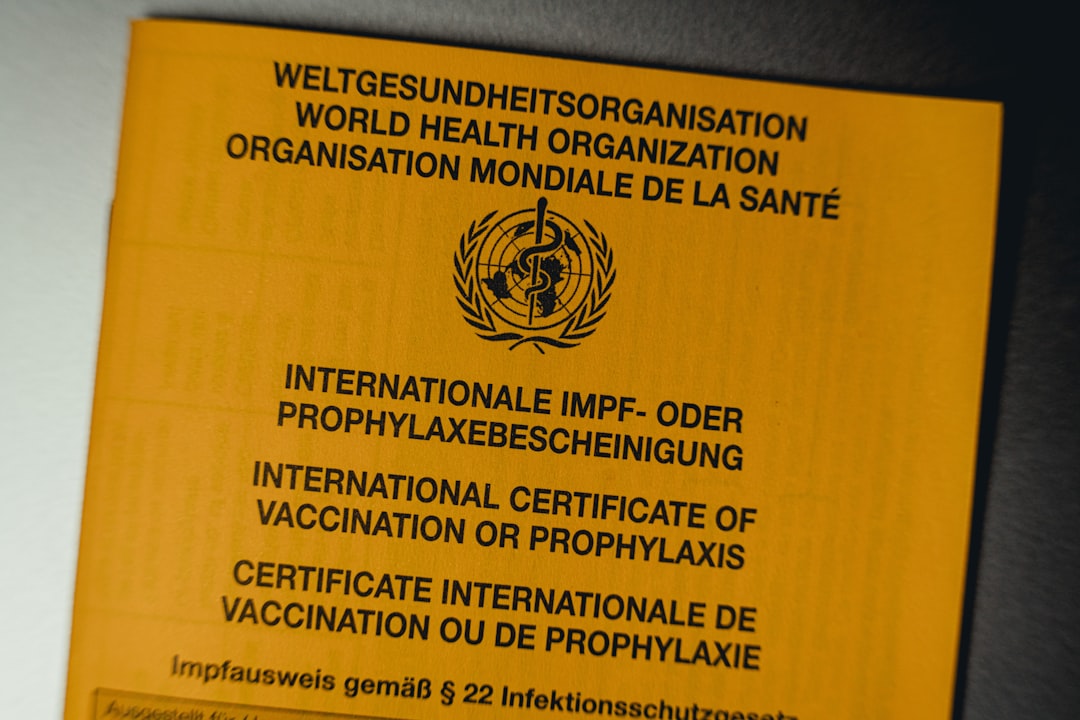
- Medical Reports and Vaccination Certificates
Furthermore, the purpose dictates the attestation level. Employee sponsorship requires full chain authentication. Conversely, some temporary business activities may need simpler verification. Therefore, identifying the exact requirement saves time and money. Always consult the official UAE visa and immigration services portal or equivalent for the latest rules.
Document Translation Certificate Attestation Strategic Overview
A strategic approach to document translation certificate attestation is vital for cost control. The process is not merely administrative. Instead, it is a critical path in your talent deployment or business expansion timeline. Delays here cascade into project setbacks and increased expenses. Therefore, viewing attestation as a core business function yields better outcomes.
Firstly, the journey begins with acquiring the original document from the issuing authority. Secondly, certified translation into Arabic or English occurs, depending on the GCC country’s preference. Thirdly, notary public attestation in the document’s country of origin takes place. Subsequently, state-level authentication from the Home Department or equivalent follows. Then, the Ministry of External Affairs (MEA) in the home country provides attestation.
Finally, the GCC destination country’s embassy or consulate legalizes the document. The last step often occurs within the GCC nation itself at the Ministry of Foreign Affairs. This entire sequence constitutes the full document translation certificate attestation chain. Moreover, skipping any step invalidates the entire process. Consequently, meticulous planning and tracking are non-negotiable.
- Phase 1: Source Document Procurement and Certified Translation
- Phase 2: Notary Public Attestation and State Government Authentication
- Phase 3: Home Country Ministry of External Affairs (MEA) Attestation
- Phase 4: Destination GCC Country Embassy Legalization
- Phase 5: Final MOFA Attestation within the GCC Country
Legal Framework and Compliance Standards
The legal framework governing attestation is built on international treaties and bilateral agreements. The Hague Convention of 1961 simplified document authentication for member countries through Apostille stamps. However, most GCC countries are not signatories. Therefore, the longer embassy legalization route remains mandatory. This underscores the importance of understanding each nation’s specific legal landscape.
Compliance standards are enforced rigorously by GCC immigration authorities. For example, the Saudi Ministry of Labor regulations specify exact attestation requirements for different professions. Similarly, Qatar’s Ministry of Administrative Development, Labor and Social Affairs has its own protocols. These standards exist to prevent fraud and ensure qualification authenticity. They protect both the employer and the local economy.
Furthermore, international bodies provide guidelines that influence local laws. The U.S. Department of Commerce labor standards reports often reference document verification. Additionally, World Bank labor market analysis highlights authentication as a key governance indicator. Therefore, adherence is not just local compliance but aligns with global best practices for ethical recruitment.
Document Translation Certificate Attestation Best Practices
Adopting best practices for document translation certificate attestation ensures efficiency and cost-effectiveness. First, always start with verified original documents. Scanned copies or notarized photocopies are only acceptable at specific stages. Second, select a translation agency recognized by the GCC embassy. Many embassies maintain a list of approved translators. Using an unapproved service causes rejection.
Third, maintain a detailed checklist and timeline for each document. Different documents may follow slightly different paths. For instance, a degree certificate requires attestation from the educational board and university. Conversely, a commercial invoice follows a chamber of commerce route. Fourth, anticipate processing times. Government offices have varying workloads. Therefore, building buffer time prevents project delays.
Fifth, understand the fee payment methods. Some authorities accept online payments. Others require bank drafts or cash. Sixth, keep impeccable records. Maintain copies of every submitted paper, payment receipt, and tracking number. Finally, partner with experts. Professional service providers like Allianze HR have established relationships and process knowledge. They navigate bureaucratic hurdles daily. Explore our professional recruitment resources for more insights.
- Verify document originality before beginning any process.
- Use only embassy-approved certified translation services.
- Create a master tracker for each employee’s document set.
- Factor in 2-3 week buffers for each major attestation stage.
- Secure multiple document copies for future visa renewals.
Documentation and Processing Steps
The documentation and processing steps form the operational core of attestation. Initially, gather all required original documents. This includes academic certificates, experience letters, and passport copies. Next, proceed with certified translation. The translator provides a stamped declaration affirming accuracy. This translated document then proceeds for notary attestation. The notary public verifies the translator’s identity and seal.
Subsequently, state-level authentication occurs. In India, for example, this is the Home Department or Human Resource Department (HRD). They verify the notary’s credentials. After state attestation, the document moves to the central government level—the Ministry of External Affairs (MEA). The MEA attests to the authenticity of the state department’s seal. This step is critical for embassy submission.
Then, the GCC embassy legalization happens. The embassy verifies the MEA stamp and applies its own. This confirms the document is recognized for use in their country. Finally, upon arrival in the GCC country, the Ministry of Foreign Affairs (MOFA) provides the final attestation. This last stamp makes the document fully legally operable within the GCC nation. Each step requires specific application forms, fees, and processing times.
Document Translation Certificate Attestation Implementation Timeline
Planning a realistic implementation timeline for document translation certificate attestation is essential. Rushed processes lead to errors and higher courier costs. A standard end-to-end timeline ranges from 4 to 8 weeks. However, this varies based on document type, country of origin, and GCC destination. Understanding this flow helps manage stakeholder expectations effectively.
Week 1 typically involves document collection and certified translation. This stage depends on translator availability. Week 2 and 3 cover notary and state-level attestations. Government departments may have processing backlogs. Furthermore, the MEA process in Week 4 can take 5-10 working days. Subsequently, embassy legalization in Week 5 requires appointment scheduling. Some embassies offer expedited services at a premium.
Finally, the MOFA attestation in the GCC country takes 3-7 working days. Therefore, the entire document translation certificate attestation cycle demands patience. Moreover, peak seasons like summer or post-holidays experience delays. Consequently, initiating the process well before the employee’s planned start date is a best practice. For bulk recruitment, staggering submissions prevents bottlenecks. Schedule a consultation appointment to create a customized timeline for your needs.
- Days 1-5: Document Collection and Certified Translation
- Days 6-15: Notary Public and State Government Attestation
- Days 16-25: Ministry of External Affairs (MEA) Attestation
- Days 26-35: GCC Embassy Legalization in Home Country
- Days 36-40: Final MOFA Attestation in Destination GCC Country
Common Challenges and Solutions
Employers face several common challenges during the attestation process. First, document discrepancies are frequent. Name spellings on degrees may not match passports. Second, translation errors can occur, leading to embassy rejection. Third, unexpected changes in government fees or procedures create budget and timeline variances. Fourth, courier delays or lost documents pose significant risks.
Fortunately, practical solutions exist for each challenge. For document discrepancies, obtain an affidavit from the issuing authority explaining the variance. For translation errors, use only certified translators with embassy approval. Regarding fee changes, regularly check official embassy websites or partner with an agency that monitors updates. For courier risks, use tracked services and maintain digital scans of every document at each stage.
Another major challenge is the lack of clear information. Government websites can be ambiguous. Therefore, leveraging professional networks and expert partners is invaluable. Furthermore, World Health Organization workplace health guidelines, for instance, may affect medical certificate requirements. Staying informed through authoritative sources mitigates confusion. Proactive problem-solving turns challenges into manageable tasks.
Expert Recommendations for Success
Expert recommendations can transform a complex attestation process into a smooth operation. First, conduct a pre-submission audit. Have a specialist review all documents before starting the formal process. This catches errors early, saving time and money. Second, standardize procedures for bulk hiring. Create templates and checklists for each document type and source country.
Third, build relationships with service providers. Reliable couriers, translators, and attestation agents are worth their weight in gold. Fourth, invest in technology. Use cloud-based tracking systems to monitor each document’s status in real-time. Fifth, always budget for contingency. Include a 15-20% buffer in your cost and timeline estimates for unforeseen issues.
Finally, prioritize compliance over speed. Cutting corners to save a few days or dollars risks complete rejection. The GCC authorities value accuracy and adherence to protocol. Therefore, a meticulous, by-the-book approach always wins in the long run. Following these expert recommendations ensures your document translation certificate attestation process supports, rather than hinders, your business objectives in the Gulf region.
Frequently Asked Questions About Document Translation Certificate Attestation Costs
What is the timeline for document translation certificate attestation costs processing?
The complete timeline typically ranges 4-8 weeks. It depends on the document’s country of origin and the GCC destination. Furthermore, each government department has its own processing speed. Therefore, consult our specialists for a precise estimate based on your specific case.
What are the main cost components in document legalization?
Major costs include certified translation fees, notary charges, state authentication fees, MEA attestation costs, GCC embassy legalization fees, MOFA attestation charges, and courier services. Additionally, service provider fees apply if using an agency. Each component varies by country and document type.
How do notary and embassy fee structures differ?
Notary fees are usually fixed statutory charges per stamp or page. Conversely, embassy fees are consular charges set by the GCC government. They are often higher and can change with little notice. Embassy fees also sometimes include service charges for handling and verification.
Can I handle the attestation process myself to save costs?
While possible, self-handling is often inefficient for businesses. The time investment, travel to multiple offices, and risk of error usually outweigh cost savings. Professional agencies have bulk processing rates and expertise that prevent costly mistakes and delays.
Why do attestation costs vary between GCC countries?
Costs vary due to different embassy fee schedules, required attestation steps, and local agent charges. For example, Saudi Arabia often requires additional Chamber of Commerce attestation for commercial documents. Qatar may have specific translation requirements that affect the overall document translation certificate attestation price.
Does Allianze HR provide attestation services for non-recruitment documents?
Yes. While we specialize in employment document attestation for recruitment, our network and expertise extend to all document types. This includes commercial, educational, and personal certificates for business setup, family sponsorship, and higher education purposes in the GCC.
Partner with Allianze HR for Document Legalization Success
Mastering document translation certificate attestation is a strategic advantage in the GCC market. This guide has detailed the costs, steps, and best practices. From notary fees to embassy legalization structures, informed planning prevents budget overruns. Moreover, adherence to compliance standards protects your business from legal risk. Therefore, a systematic approach is non-negotiable for success.
The complexities of the process highlight the value of expert partnership. Allianze HR Consultancy provides end-to-end support for your attestation needs. We manage the entire chain, ensuring accuracy, timeliness, and cost-efficiency. Furthermore, our deep regional knowledge navigates the unique requirements of each GCC nation. Consequently, you can focus on your core business operations with peace of mind.
Do not let document authentication become a barrier to your growth. Streamline your recruitment and business setup with professional assistance. Contact