



Are your facility management payment workflows causing operational delays and financial discrepancies? In the fast-paced GCC business environment, inefficient invoice processing monthly billing procedures can drain resources and strain vendor relationships. Furthermore, complex approval hierarchies and strict compliance requirements add significant complexity. Therefore, mastering these financial workflows is not just an administrative task. It is a strategic imperative for cost control and operational excellence.
Facility management encompasses diverse services, from maintenance and security to utilities and cleaning. Consequently, the volume of invoices can be substantial. Moreover, GCC regulations often mandate specific documentation and authorization chains. Additionally, cultural nuances in business communication affect payment timelines. Understanding these regional specifics is crucial for any organization operating in the Gulf.
At Allianze HR Consultancy, we’ve successfully placed 10,000+ professionals across UAE, Saudi Arabia, Qatar, and Kuwait. Furthermore, our 5+ years of GCC expertise supports clients from 50+ countries in optimizing their back-office operations, including financial workflows. Moreover, our Ministry of External Affairs (India) RA license ensures compliance in all our advisory services. Therefore, contact our recruitment specialists for expert guidance on building teams that can execute these critical procedures flawlessly.
Understanding GCC Financial Workflow Requirements
GCC markets operate with unique financial protocols. First, official documentation often requires Arabic translations or dual-language formats. Second, government entities and large corporations frequently use complex, multi-tiered approval systems. Third, cultural respect for hierarchy means payment approvals must follow formal chains of command. Additionally, VAT implementation across the region has added another compliance layer.
Therefore, standardizing your accounts payable process is essential. For example, consistent coding of facility management invoices allows for accurate cost tracking. Moreover, digital records must align with UAE tax authority requirements. Consequently, training your finance team on these specifics prevents costly errors. Finally, integrating local practices with international standards creates a robust system.
- Mandate bilingual (Arabic/English) invoice support for all vendors.
- Establish approval matrices that reflect organizational hierarchy.
- Implement VAT-compliant coding for all service categories.
- Require purchase order (PO) matching for all billed services.
- Schedule payments to align with common GCC business cycles.
Invoice Processing Monthly Billing Procedures Strategic Overview
A strategic approach to invoice processing monthly billing procedures transforms a reactive task into a value-added function. Specifically, it ensures timely payments, maintains strong vendor partnerships, and provides accurate financial data. Furthermore, in facility management, where services are continuous, delayed payments can disrupt essential operations. Therefore, viewing this process strategically protects your core business activities.
Moreover, automation plays a key role in modern strategies. For instance, Optical Character Recognition (OCR) software can extract data from paper invoices. Subsequently, this data flows into an automated workflow for verification and approval. Additionally, centralized digital repositories provide audit trails for compliance. Consequently, strategic investment in technology yields high returns in efficiency and control.
- Align the billing cycle with your facility management service periods.
- Centralize invoice receipt through a dedicated digital portal or email.
- Define clear service-level agreements (SLAs) with internal stakeholders.
- Integrate your accounts payable system with budget control tools.
- Conduct regular reviews of procedure efficiency and cost per invoice.
Legal Framework and Compliance Standards
Navigating the legal landscape is critical for GCC financial operations. First, commercial laws in each emirate or kingdom govern contract enforcement and payment terms. Second, anti-bribery and corruption regulations, such as the UAE’s Federal Law No. 34 of 2021, impose strict rules on vendor interactions. Third, data protection laws regulate how invoice information is stored and processed. Additionally, international standards from bodies like the International Labour Organization influence subcontractor payments.
Furthermore, compliance extends to your workforce. For example, ensuring payroll for your finance team complies with the Saudi Ministry of Labor regulations is parallel to vendor payment compliance. Moreover, proper documentation is your primary defense in audits. Consequently, every step in your payment workflow must create a verifiable record. Finally, staying updated on legal changes is a non-negotiable ongoing activity.
- Retain all invoices and approval records for the statutory period (often 5+ years).
- Ensure contracts with facility management firms include clear payment clauses.
- Verify that vendor invoices comply with GCC VAT invoice requirements.
- Apply withholding tax correctly for cross-border payments, if applicable.
- Adhere to electronic filing mandates for large transactions.
Invoice Processing Monthly Billing Procedures Best Practices
Implementing best practices for invoice processing monthly billing procedures guarantees consistency and accuracy. First, adopt a three-way matching system: purchase order, delivery note/service report, and invoice. Second, establish a standardized coding chart for all facility management cost centers (e.g., HVAC, landscaping, security). Third, enforce a “no PO, no pay” policy to control unauthorized spending. Additionally, regular reconciliation of the accounts payable ledger prevents budget overruns.
Moreover, communication is a vital best practice. For example, providing vendors with clear submission guidelines reduces errors and follow-up. Subsequently, this speeds up the entire payment workflow. Furthermore, training your AP team on the nuances of facility management services improves validation quality. Consequently, they can better verify that billed hours or materials align with contract scope. Therefore, best practices combine policy, technology, and people.
- Implement electronic three-way matching to automate verification.
- Schedule a monthly billing review meeting with facility managers.
- Use early payment discounts strategically to improve cash flow.
- Develop a vendor portal for status updates and document submission.
- Create a standardized checklist for invoice approval to ensure completeness.
Documentation and Processing Steps
A clear, step-by-step process is the backbone of efficient payment workflows. Step one is invoice capture and logging. All invoices, whether paper or digital, must enter a centralized tracking system immediately. Step two is verification and coding. Here, details are checked against POs and service reports, then assigned the correct GL code. Step three is the approval routing. The invoice is electronically routed to authorized personnel based on amount and cost center.
Next, step four is final review and payment scheduling. The finance team batches approved invoices for payment according to terms. Step five is execution and record-keeping. Payments are made via bank transfer, and all documents are archived. Furthermore, each step should have a defined owner and timeframe. Moreover, utilizing workflow automation tools minimizes manual handling. Consequently, this structured approach, as supported by facility management industry standards, reduces errors and delays significantly.
- Step 1: Capture – Scan paper invoices; direct digital invoices to a dedicated inbox.
- Step 2: Verify – Match to PO, confirm receipt of service, validate calculations.
- Step 3: Approve – Route via configured workflow based on amount and department.
- Step 4: Schedule – Enter into payment run based on due date and cash flow.
- Step 5: Pay & Archive – Execute payment, file invoice, and update vendor ledger.
Invoice Processing Monthly Billing Procedures Implementation Timeline
Transitioning to a optimized system requires careful planning. Typically, a full implementation of refined invoice processing monthly billing procedures takes 8 to 12 weeks. Month one focuses on discovery and design. During this phase, current workflows are mapped, and pain points are identified. Furthermore, software requirements are defined, and an approval matrix is drafted. Additionally, key stakeholders from finance and facilities are engaged.
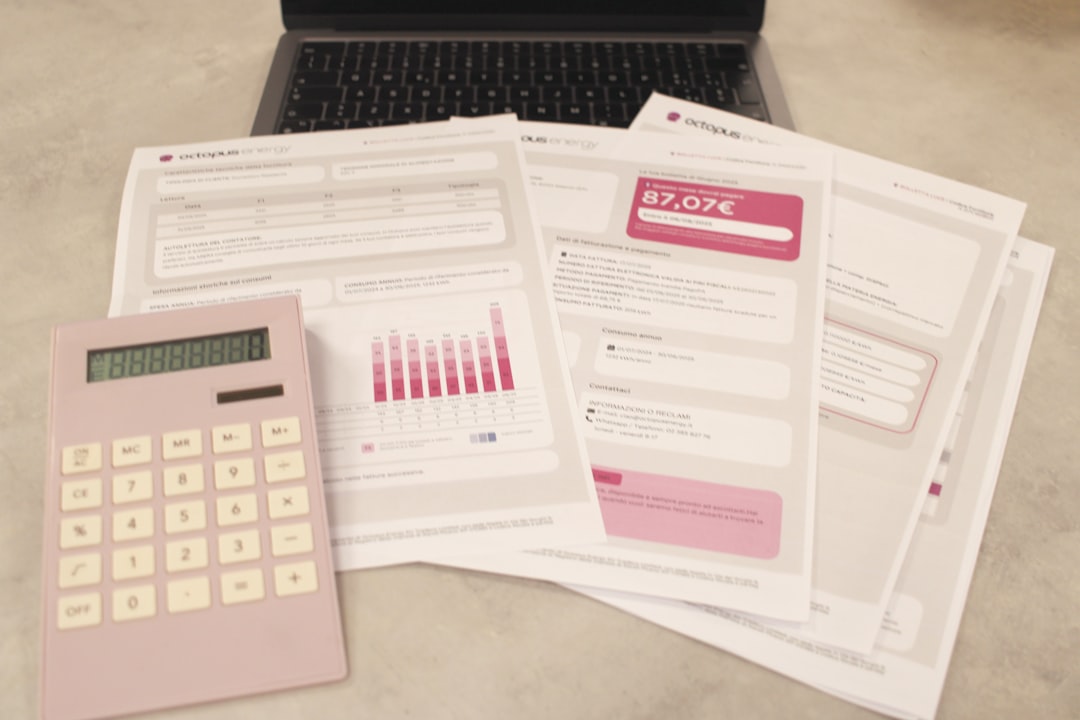
Month two centers on development and testing. The new workflow is built in your chosen system, and the team is trained. Moreover, a pilot run is conducted with a select group of vendors. Subsequently, month three involves the official rollout and monitoring. The new procedure goes live for all facility management invoices. Consequently, close monitoring in the first billing cycle is essential to catch issues. Therefore, a phased timeline ensures a smooth transition with minimal disruption to ongoing payments.
- Weeks 1-4: Process audit, stakeholder interviews, and solution design.
- Weeks 5-6: System configuration and development of approval workflows.
- Weeks 7-8: Comprehensive training for all AP and facility staff.
- Weeks 9-10: Pilot implementation with 20% of vendor invoices.
- Weeks 11-12: Full rollout, performance monitoring, and adjustment period.
Common Challenges and Solutions
Even with good procedures, challenges arise. A frequent issue is missing purchase orders or supporting documents. The solution is to implement a gatekeeping function where invoices without a PO are returned immediately to the requester. Another common problem is approval bottlenecks caused by absent managers. Consequently, implementing delegate approvers and escalation rules keeps workflows moving. Additionally, discrepancies in service delivery versus billing cause disputes. Therefore, requiring signed service reports from on-site facility managers before invoice approval is effective.
Moreover, managing a high volume of small-value invoices from multiple vendors is taxing. The solution is to consolidate services under master vendors or negotiate consolidated monthly billing. Furthermore, compliance with evolving regulations like VAT or e-invoicing is challenging. Hence, subscribing to regulatory update services and using compliant software is crucial. Finally, a lack of visibility into the process status leads to constant vendor inquiries. Implementing a self-service vendor portal, as recommended in World Bank urban development reports on efficient service management, provides transparency.
- Challenge: Lost invoices. Solution: Mandate electronic submission only.
- Challenge: Slow approvals. Solution: Set automated reminders and escalation paths.
- Challenge: Coding errors. Solution: Use pre-defined dropdown menus and auto-suggest.
- Challenge: Duplicate payments. Solution: Implement an invoice number duplication check.
- Challenge: Fraud risk. Solution: Segregate duties between invoice entry, approval, and payment.
Expert Recommendations for Success
To achieve lasting success, go beyond basic procedure setup. First, invest in relationship management with your key facility management vendors. Regular meetings align expectations and pre-empt issues. Second, leverage data analytics from your payment system. Analyze payment cycles, discount capture rates, and processing costs to identify improvement areas. Third, foster a culture of continuous improvement within your AP team. Encourage them to suggest workflow enhancements.
Furthermore, ensure your team has the right skills. This is where a partner like Allianze HR adds value. We recruit finance and administration professionals who understand GCC payment workflows. Moreover, consider integrating your AP system with broader facility management and environmental standards tracking. Finally, schedule annual audits of your entire process. An external review can uncover risks and inefficiencies you may overlook internally. Therefore, a proactive, skilled, and data-driven approach secures optimal outcomes.
- Appoint a Process Owner responsible for the end-to-end workflow performance.
- Benchmark your cost per invoice and processing time against industry standards.
- Integrate sustainability metrics by tracking payments to green-certified vendors.
- Develop a contingency plan for payment processing during system outages.
- Partner with a recruitment firm like Allianze to build a skilled, compliant finance team.
Frequently Asked Questions About Invoice Processing Monthly Billing Procedures
What is the timeline for implementing invoice processing monthly billing procedures?
A full implementation typically takes 8-12 weeks. Furthermore, this includes design, testing, training, and phased rollout. Therefore, proper planning is essential for a smooth transition without disrupting vendor payments.
What are the biggest compliance risks in GCC payment workflows?
Key risks include non-compliance with VAT invoicing rules, inadequate audit trails, and violations of local commercial transaction laws. Moreover, improper documentation for government contracts can lead to penalties. Consequently, regular compliance checks are critical.
How can we reduce approval bottlenecks in our accounts payable process?
Establish clear delegate approvers for each manager. Additionally, implement automated escalation rules. Furthermore, use mobile approval applications to speed up responses. Consequently, these steps significantly reduce delays in the authorization chain.
What technology is most effective for automating invoice processing?
Cloud-based AP automation software with OCR, workflow routing, and ERP integration is most effective. Additionally, platforms offering vendor portals and real-time analytics provide greater control. Therefore, choose a solution that scales with your business needs.
How does Allianze HR support finance team recruitment for these functions?
We source and vet finance professionals with specific experience in GCC accounts payable and facility management sectors. Furthermore, we ensure candidates understand regional compliance. Moreover, our professional recruitment resources help clients define precise role requirements.
What metrics should we track to measure the efficiency of our billing procedures?
Key performance indicators include cost per invoice processed, average processing time, early payment discount capture rate, and first-pass match rate. Additionally, track vendor satisfaction scores. Consequently, these metrics provide a clear picture of performance and ROI.
Partner with Allianze HR for Financial Workflow Success
Optimizing your invoice processing monthly billing procedures is a direct investment in financial health and operational stability. Throughout this guide, we’ve highlighted the importance of strategy, compliance, technology, and skilled personnel. Furthermore, efficient facility management payment workflows prevent service disruptions and build strong vendor partnerships. Moreover, in the regulated GCC environment, a robust process is your best defense against compliance risks and financial leakage.
Ultimately, your people execute your procedures. Therefore, building a capable, well-trained accounts payable and finance team is paramount. At Allianze HR, we specialize in connecting GCC employers with the talent that drives efficiency. From accounts payable clerks to finance managers, we understand the specific competencies required for flawless payment operations. Let us help you secure the human capital needed to implement these best practices. For a detailed discussion on how our recruitment expertise can support your back-office excellence, schedule a consultation appointment with our specialists today.