


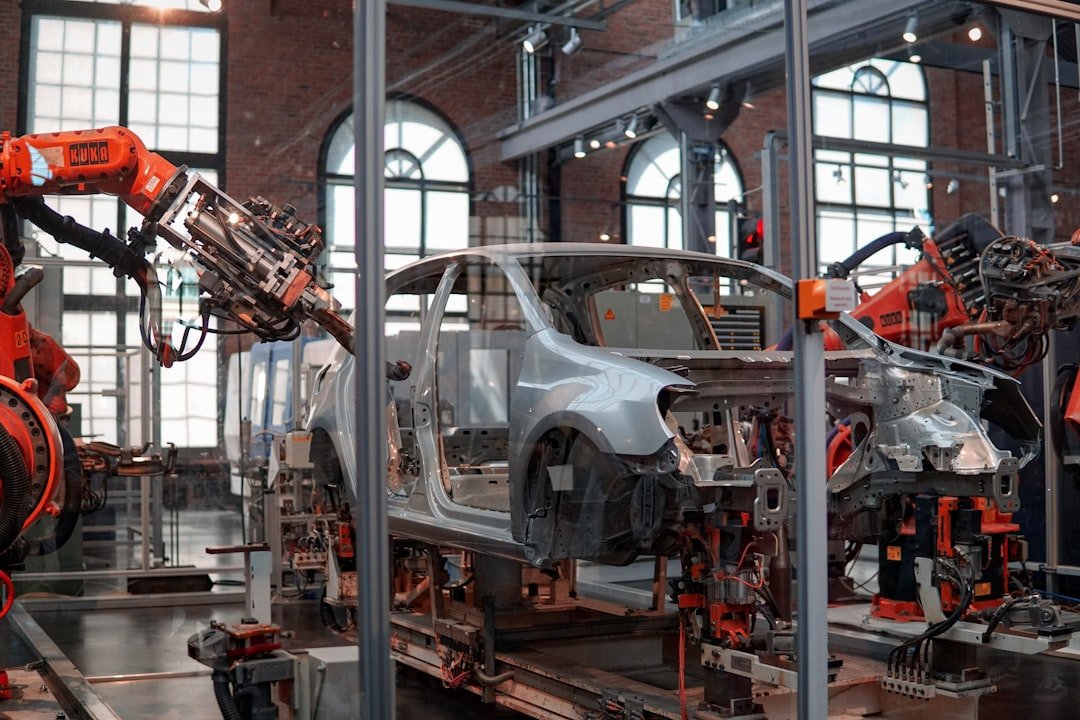
The European automotive sector faces a critical skills crisis as 2026 approaches. Production lines in Germany, France, and Italy run below capacity due to worker shortages. European Auto Industry Labor gaps have intensified with the transition to electric vehicles. Additionally, an aging workforce is retiring faster than replacements arrive. Therefore, European automakers increasingly consider hiring skilled workers from Asia. India, Bangladesh, and the Philippines offer manufacturing-ready talent at competitive costs. This comprehensive guide examines how EU manufacturers can leverage Asian workforce pools. Furthermore, we cover essential compliance requirements and proven integration strategies for sustainable success. However, navigating cross-border recruitment demands careful planning and expert guidance. Consequently, this article serves as a practical playbook for 2026 talent acquisition.
The transformation of automotive manufacturing has created unprecedented skill demands. Electric vehicle battery production requires specialized technical expertise. Meanwhile, traditional combustion-engine roles decline steadily. Furthermore, workers from South Asia arrive with robust vocational training backgrounds. For example, India produces over 1.5 million engineering graduates annually. Moreover, Bangladesh and the Philippines excel in mechatronics and quality assurance. Notably, wage differentials make Asian recruitment economically attractive. EU manufacturers can reduce labor costs by 30-40 percent. Nevertheless, employers must navigate work permits and labor law complexities. Additionally, cross-border social security agreements affect total employment costs. Consequently, strategic alignment between hiring plans and compliance requirements is essential.
At Allianze HR Consultancy, we’ve successfully placed 10,000+ professionals across European and GCC markets. Furthermore, our 5+ years of international recruitment expertise supports clients from 50+ countries. Moreover, our Ministry of External Affairs (India) RA license ensures ethical hiring compliance. Therefore, contact our HR specialists for comprehensive Asian talent acquisition support. Additionally, we provide end-to-end management covering sourcing, screening, and onboarding. Our dedicated EU desk understands local labor regulations intimately. Besides, our extensive network spans vocational institutes and engineering universities across India, Bangladesh, and the Philippines. Namely, we handle every documentation aspect from visa sponsorship to work permit liaison. Consequently, European automakers gain a seamless hiring experience. Finally, our transparent pricing structure and dedicated account managers ensure complete confidence. Thus, partnership with Allianze HR minimizes risks and accelerates workforce deployment.
Understanding EU Manufacturing Talent Requirements
European automakers require specific competencies in modern manufacturing environments. Specifically, EV battery assembly, robotic automation, and precision welding top the demand list. Additionally, quality control specialists with ISO certification are highly valued. Moreover, technicians must demonstrate digital literacy for smart factory systems. First, technical proficiency remains the primary selection criterion. Candidates from Asian vocational training programs arrive with strong hands-on experience. Second, soft skills including communication and teamwork matter greatly. Furthermore, adaptability allows workers to integrate into European production cultures.
Besides technical qualifications, EU employers value candidates with international work experience. Additionally, language proficiency in English or host-country languages improves integration. Notably, Germany and France prefer workers with basic local language skills. However, many manufacturers implement language training post-arrival. Moreover, formal certification recognition is crucial. Namely, European standards require verification of foreign qualifications. Consequently, employers should plan credential evaluation early. Furthermore, EU Blue Card programs facilitate skilled migration for qualified applicants. Thus, early identification of role-specific requirements streamlines the entire hiring process. Therefore, defining clear job profiles before recruitment saves significant time. Furthermore, automotive manufacturers must also assess candidates’ safety awareness. Specifically, EU workplace safety directives mandate rigorous training procedures. Therefore, incorporating safety compliance into job descriptions attracts suitable talent.
European Auto Industry Labor Strategic Overview
European Auto Industry Labor strategies must address both immediate gaps and long-term workforce needs. Furthermore, a structured approach to Asian recruitment delivers substantial competitive advantages. Consequently, forward-thinking automakers are establishing dedicated international hiring pipelines.
Key strategic benefits include:
- Cost efficiency with 30-40 percent savings on labor expenses
- Access to large pools of technically trained manufacturing professionals
- Faster scaling capabilities for new production lines
- Diverse perspectives that drive innovation in manufacturing processes
- Reduction of dependency on shrinking local labor markets
- Long-term workforce stability through structured retention programs
Moreover, India’s automotive components sector produces exceptionally skilled technicians. Bangladesh contributes strong mid-level manufacturing expertise. Meanwhile, the Philippines offers excellent English-speaking engineering talent. Additionally, these countries maintain government-supported vocational training ecosystems aligned with industry needs. Besides, successful strategic implementation requires careful market selection. Specifically, employers must evaluate each source country’s training standards, visa processing times, and cultural fit. Therefore, conducting thorough workforce planning ensures alignment between recruitment goals and production schedules. Thus, proactive planning in 2025 positions European manufacturers for 2026 success. Furthermore, engaging specialized recruitment partners accelerates market entry. Additionally, partnerships with vocational institutes in source countries create sustainable talent pipelines.
Legal Framework and Compliance Standards
European Union labor regulations establish clear parameters for international hiring. First, employers must obtain work permits for non-EU workers. Moreover, EU Blue Card schemes provide streamlined pathways for highly qualified professionals. Nevertheless, national variations exist across Germany, France, and Italy. Consequently, legal expertise is essential. Additionally, the ILO international labour standards provide foundational guidelines for worker treatment. Furthermore, the U.S. Commerce Department labor rights framework offers comparative insights. Moreover, World Bank labor market analysis helps employers understand migration trends. These resources collectively guide compliant recruitment practices.
Besides, employers must adhere to wage equality principles. Specifically, Asian workers must receive the same compensation as EU counterparts. Additionally, housing and working conditions must meet local standards. Furthermore, collective bargaining agreements may require union consultation. Therefore, employers should conduct regular compliance audits. Meanwhile, social security coordination between EU and source countries affects net employment costs. Thus, proactive legal review minimizes liability. Besides, anti-discrimination laws protect international workers throughout employment. Notably, the Equal Treatment Directive ensures fair working conditions. Therefore, comprehensive compliance programs cover recruitment, onboarding, and retention. Additionally, documentation retention requirements demand rigorous record-keeping. Consequently, partnering with compliance experts ensures full regulatory alignment.
European Auto Industry Labor Best Practices
Implementing European Auto Industry Labor best practices ensures successful workforce integration. Moreover, structured onboarding programs dramatically improve retention rates. Furthermore, cultural sensitivity training benefits both Asian workers and European teams.
Best practices for successful deployment:
- Pre-arrival orientation covering workplace culture and legal rights
- Structured language training programs during the first six months
- Dedicated housing support near production facilities
- Mentorship programs pairing new hires with experienced employees
- Regular feedback sessions addressing integration concerns
- Clear career progression pathways to boost motivation
Additionally, transparent communication channels build trust between management and workers. Namely, regular town halls allow open dialogue about workplace matters. Furthermore, inclusive team-building activities foster cross-cultural understanding. Consequently, workers feel valued and remain committed to organizational success. Moreover, compliance with EU labor laws requires ongoing monitoring. Specifically, employers must track work permit renewals and visa conditions diligently. Besides, collaboration with local authorities ensures smooth regulatory processes. Therefore, investing in HR capabilities strengthens the entire recruitment framework. Additionally, leveraging professional recruitment resources enhances program effectiveness. Thus, following these best practices positions automakers for sustained talent success. Furthermore, celebrating cultural diversity within production facilities drives innovation. Notably, companies with inclusive workplace policies report higher employee satisfaction. Consequently, these organizations achieve lower turnover rates and greater operational stability.
Documentation and Processing Steps
Efficient documentation processing is critical for international recruitment success. First, employers must prepare valid employment contracts meeting EU standards. Additionally, candidates require passports valid for at least six months. Moreover, educational credentials demand official attestation and translation.
The processing sequence typically involves:
- Job offer and signed employment contract
- Work permit application with local labor authorities
- Visa application at the relevant embassy or consulate
- Medical screening and health insurance enrollment
- Travel arrangement and pre-boarding orientation
- Registration with local authorities post-arrival
Furthermore, employers must verify all documents for authenticity. Specifically, credential evaluation agencies assess foreign qualifications against EU standards. Additionally, background checks provide crucial safety assurances. Besides, visa processing times vary significantly by country. Therefore, early application submission prevents production delays. Moreover, digital document management systems streamline the entire process. Namely, centralized repositories ensure accessibility for all stakeholders. Furthermore, regular status updates keep candidates informed throughout processing. Consequently, clear communication reduces anxiety and enhances candidate experience. Additionally, contact our HR specialists for document preparation guidance. Thus, meticulous documentation handling accelerates time-to-hire significantly. Specifically, maintaining organized files prevents common processing errors. Furthermore, electronic submissions speed up government review procedures. Finally, retaining copies of all submissions protects both parties legally.
European Auto Industry Labor Implementation Timeline
A structured European Auto Industry Labor implementation timeline prevents operational disruption. Moreover, understanding each phase allows manufacturers to plan production confidently. Consequently, realistic scheduling reduces frustration for both employers and candidates.
Typical implementation timeline:
- Phase 1 (Weeks 1-2): Needs assessment and job profile finalization
- Phase 2 (Weeks 3-5): Candidate sourcing, screening, and interviews
- Phase 3 (Weeks 6-8): Contract signing and work permit application
- Phase 4 (Weeks 9-10): Visa processing and medical screening
- Phase 5 (Weeks 11-12): Relocation, orientation, and training
First, clear needs assessment ensures accurate role definition. Additionally, professional recruiters accelerate candidate identification significantly. Furthermore, employers should prepare comprehensive documentation during initial phases. Therefore, starting early maximizes the chances of meeting production targets. Meanwhile, government processing times remain outside employer control. Thus, building buffer time into schedules is essential. Besides, phased onboarding helps manufacturing facilities absorb new workers gradually. Specifically, cohort-based arrivals allow structured training and seamless integration. Moreover, evaluating implementation progress enables continuous improvement. Consequently, manufacturers achieving full workforce capacity earlier gain competitive advantages. Therefore, disciplined timeline management directly impacts production reliability. Additionally, flexible planning accommodates unexpected delays gracefully. Furthermore, regular progress reviews against milestones keep all stakeholders aligned. Namely, monthly reporting ensures transparency throughout the entire process.
Common Challenges and Solutions
International recruitment presents several predictable challenges for European automakers. However, proactive solutions minimize their impact. First, language barriers frequently impede initial workplace communication. Therefore, comprehensive language training programs are essential. Additionally, cultural differences affect team dynamics and productivity. Thus, cultural awareness workshops benefit everyone.
Another common challenge involves housing and relocation logistics. Specifically, securing suitable accommodation near manufacturing plants proves difficult. Nevertheless, partnerships with local housing providers solve this issue. Furthermore, family relocation needs demand additional support services. Hence, comprehensive relocation packages attract and retain talent. Additionally, credential recognition delays can postpone work starts. Consequently, early credential evaluation planning prevents costly delays. Moreover, bureaucratic complexities slow visa processing timelines. Therefore, professional immigration experts navigate these processes efficiently. Besides, wage expectations may differ across source countries. Thus, transparent compensation discussions during interviews prevent misunderstandings.
Furthermore, retention of international workers requires deliberate effort. Notably, career development opportunities significantly improve retention rates. Additionally, social integration programs help workers feel welcome. Meanwhile, regular stay interviews identify issues before escalation. Therefore, continuous engagement strategies sustain workforce stability. Consequently, addressing these challenges systematically creates an environment where Asian workers thrive.
Expert Recommendations for Success
Success in Asian talent acquisition requires expert guidance and proven methodologies. First, partner with established recruitment agencies having EU-specific expertise. Moreover, invest in comprehensive onboarding infrastructure before workers arrive. Additionally, cultivate relationships with vocational training institutions in source countries. Therefore, these foundational steps ensure recruitment program success.
Experts also recommend starting with pilot cohorts. Specifically, smaller first groups allow processes to be refined. Additionally, collecting feedback from initial hires improves future cycles. Furthermore, tracking recruitment metrics helps measure return on investment. Consequently, data-driven adjustments optimize the entire hiring framework. Moreover, aligning recruitment strategies with production forecasts prevents understaffing. Namely, integrate hiring timelines with plant expansion schedules. Besides, developing internal HR capability for international workforce management matters greatly. Thus, building a dedicated international recruitment team signals organizational commitment. Additionally, engaging local community representatives facilitates smoother integration. Therefore, these expert recommendations create sustainable workforce solutions. Furthermore, consider schedule consultation appointment with Allianze HR specialists. Our team provides tailored strategies for European automotive manufacturers. Finally, regular program reviews with professional advisors ensure continuous compliance and improvement. Additionally, benchmarking against industry peers highlights improvement opportunities. Therefore, participating in automotive HR forums provides valuable networking. Furthermore, Allianze HR’s dual-region presence enables clients to benchmark against global compliance frameworks, including UAE visa and immigration services and Saudi Ministry of Human Resources standards.
Frequently Asked Questions About European Auto Industry Labor
What is the process for hiring Asian manufacturing workers in the EU?
The process typically takes 8-12 weeks depending on EU country requirements. Furthermore, documentation preparation affects processing speed. Therefore, consult our specialists for accurate timelines.
What documentation is required for Asian workforce recruitment?
Required documents include employment contracts, visa applications, medical certificates, and educational credentials. Additionally, country-specific requirements vary. Moreover, attestation procedures apply for all documents.
What are typical costs for international manufacturing hiring services?
Costs vary by position level, country, and volume. Furthermore, visa fees, medical screening, and documentation affect total investment. Therefore, request detailed quotations for accuracy.
How does Allianze HR ensure legal compliance?
We maintain Ministry-approved RA license status under The Emigration Act, 1983. Additionally, our team monitors EU labor law changes continuously. Moreover, we conduct thorough documentation verification at every stage.
Which European countries does Allianze HR serve?
We serve Germany, France, Italy, Spain, Netherlands, and Belgium. Furthermore, our talent network spans India, Nepal, Bangladesh, Pakistan, Sri Lanka, and the Philippines.
What sectors does Allianze specialize in?
Our expertise covers automotive manufacturing, industrial engineering, and technical services. Additionally, we handle both skilled and semi-skilled recruitment.
Partner with Allianze HR for European Manufacturing Success
European automakers face decisive workforce challenges in 2026. However, strategic Asian recruitment offers a proven solution. Furthermore, European Auto Industry Labor demands require expert navigation. Consequently, partnering with experienced recruitment specialists ensures successful outcomes. At Allianze HR Consultancy, we combine international recruitment expertise with deep compliance knowledge. Therefore, we deliver complete talent acquisition solutions. Additionally, our proven track record of 10,000+ placements demonstrates reliability. Moreover, our end-to-end services cover every aspect of the hiring journey.
Specifically, we handle sourcing, documentation, visa processing, and post-arrival integration. Furthermore, our dedicated European desk ensures alignment with local labor laws. Besides, our transparent processes keep clients informed at every stage. Therefore, manufacturers can focus on production while we manage workforce deployment. Consequently, taking action now positions your organization for sustained 2026 success. Thus, contact our recruitment specialists today. Additionally, schedule consultation appointment for personalized guidance. Furthermore, explore our professional recruitment resources for deeper insights. Finally, secure your manufacturing workforce ahead of the competition. Moreover, acting before competitors ensures you access the best talent first. Especially, early engagement with recruitment partners yields optimal results. Namely, companies that prepare in advance avoid costly production stoppages. Therefore, make the strategic decision today to future-proof your workforce.