


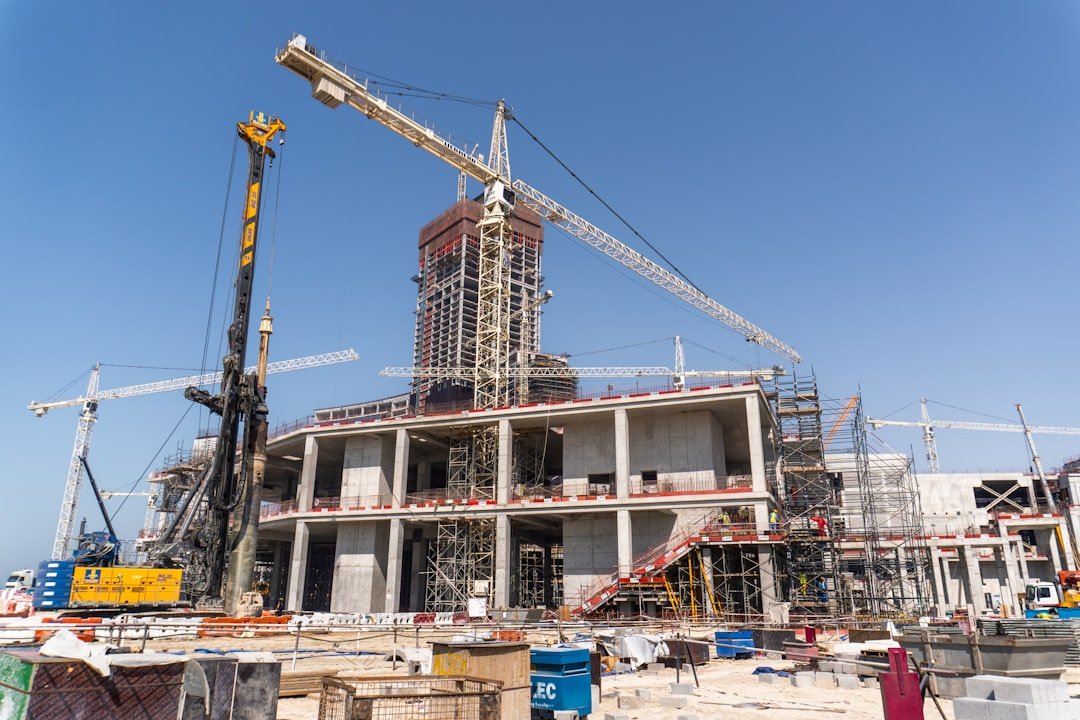
The Gulf construction sector is experiencing remarkable expansion heading into 2026. Consequently, employers across the UAE, Saudi Arabia, and Qatar face growing pressure to offer competitive compensation packages. GCC Construction Salaries 2026 benchmarks reveal significant shifts in blue-collar pay structures. Furthermore, workforce demand for South Asian talent remains exceptionally high. Therefore, understanding current wage standards helps employers budget accurately. Notably, fair compensation directly impacts retention, productivity, and project timelines. Similarly, contractors who adjust wages strategically avoid losing skilled workers to rival firms. Indeed, wage transparency has become a decisive factor for job seekers throughout the region. Moreover, forward-thinking employers treat construction pay as an investment rather than an expense.
Construction firms increasingly recruit masons, welders, pipe fitters, and drivers from India and Pakistan. Moreover, these skilled workers form the backbone of mega-projects across the region. Additionally, wage expectations vary considerably between emirates and kingdoms. Besides, exchange rates and remittance trends influence pay negotiations. Notably, employers who monitor market rates gain a competitive hiring advantage. Especially, companies implementing structured salary reviews observe stronger workforce stability. Furthermore, accurate wage benchmarking reduces expensive mid-project attrition. Meanwhile, transparent pay scales help construction firms build trustworthy employer brands. Consequently, reliable compensation strategies protect both budgets and reputations.
At Allianze HR Consultancy, we’ve successfully placed 10,000+ professionals across UAE, Saudi Arabia, Qatar, and Kuwait. Furthermore, our 5+ years of GCC expertise supports clients from 50+ countries. Moreover, our Ministry of External Affairs (India) RA license ensures compliance. Therefore, contact our recruitment specialists for expert guidance. We provide current salary surveys and comprehensive market intelligence. Additionally, our team handles complete mobilization from documentation to onboarding. Consequently, employers save substantial time and resources. Finally, our end-to-end recruitment solutions ensure your construction teams remain fully staffed and motivated. We also offer tailored compensation advisory services. Subsequently, your organization gains precise pay positioning against competitor employers. Additionally, our sourcing networks across Punjab, Kerala, Uttar Pradesh, and Sindh deliver qualified candidates quickly. Meanwhile, our proven track record makes us the preferred staffing partner for major contractors.
Understanding GCC Construction Market Requirements
The Gulf construction industry continues its rapid expansion through 2026. Specifically, mega-projects in Dubai, Riyadh, Doha, and Abu Dhabi fuel massive demand for tradespeople. Furthermore, Saudi Arabia’s Vision 2030 creates enormous pipelines for infrastructure and urban development. Consequently, construction employers across the region compete fiercely for qualified manpower from South Asia. Additionally, large-scale events and tourism projects continue generating employment opportunities.
Key market drivers include:
- Massive infrastructure spending across GCC capitals
- Rising demand for Indian and Pakistani skilled workers
- Growing preference for structured pay packages
- Increasing workforce mobility between Gulf states
- Strong competition for certified welders and pipe fitters
Indian and Pakistani workers represent the largest share of blue-collar construction labor. Moreover, these professionals bring strong technical skills and proven reliability. Additionally, employers value their adaptability to harsh working environments. Besides their craftsmanship, workers appreciate opportunities for overtime earnings and career progression. Therefore, understanding local wage variations is essential for accurate budgeting. Meanwhile, project owners increasingly prioritize workforce availability when scheduling key milestones. Furthermore, subcontractor networks closely track pay differentials across neighboring GCC states. Hence, contractors who benchmark regularly gain strategic hiring advantages. Finally, market surveys indicate steady upward pressure on blue-collar pay rates.
GCC Construction Salaries 2026 Strategic Overview
Understanding pay levels for essential construction roles helps employers structure attractive offers. The strategic overview provided here delivers critical data for workforce planning. Specifically, benchmark figures reflect current market conditions across the UAE, Saudi Arabia, and Qatar. Furthermore, comparing national averages helps employers decide where to allocate recruitment efforts.
Average monthly salary ranges for 2026:
- Masons: AED 900-1,400 (UAE), SAR 900-1,300 (KSA), QAR 1,000-1,600 (Qatar)
- Welders: AED 1,200-1,800 (UAE), SAR 1,200-1,700 (KSA), QAR 1,300-2,000 (Qatar)
- Pipe fitters: AED 1,300-1,900 (UAE), SAR 1,300-1,800 (KSA), QAR 1,400-2,100 (Qatar)
- Drivers: AED 1,100-1,600 (UAE), SAR 1,000-1,500 (KSA), QAR 1,200-1,700 (Qatar)
Similarly, wages vary based on certification levels and project complexity. Indeed, certified welders command premium rates across all Gulf markets. Moreover, pipe fitters with structural experience receive comparable packages. Consequently, compensation varies significantly between entry-level and senior positions. Additionally, accommodation, transportation, and meals are typically included as standard benefits. Therefore, employers must calculate total cost-to-company rather than base pay alone. These salary benchmarks help employers anticipate hiring budgets accurately. Besides, competitive pay reduces workforce turnover rates significantly. Furthermore, transparent salary structures build worker loyalty and strengthen employer branding.
Legal Framework and Compliance Standards
Drafting compensation packages requires strict adherence to legal standards. Specifically, GCC nations enforce comprehensive labor laws protecting blue-collar workers. Furthermore, employers must comply with visa regulations, insurance requirements, and contractual obligations.
Core compliance areas include:
- Minimum wage regulations in each GCC country
- Overtime payment rules and working hour limits
- Mandatory medical insurance and accommodation standards
- End-of-service benefit calculations
- Contract registration with government labor portals
In the UAE, the Ministry of Human Resources and Emiratisation regulates recruitment practices. Similarly, Saudi Arabia’s Ministry of Human Resources oversees employment standards. Moreover, Qatar’s labor reforms introduce extensive worker protection measures. Additionally, compliance requirements extend beyond wages. Particularly, employers must provide suitable accommodation, medical coverage, and safe working environments. For example, WHO occupational health guidelines recommend regular workplace wellness assessments. Furthermore, ILO employment promotion resources provide useful frameworks for fair recruitment. Besides, employers who maintain compliant structures protect their reputations. Consequently, regulatory compliance becomes a strategic advantage. Therefore, consulting specialized recruitment partners ensures complete legal alignment during program planning.
GCC Construction Salaries 2026 Best Practices
Implementing effective compensation strategies requires practical frameworks. The best practices outlined below emphasize structured wage programs. Specifically, employers should adopt transparent salary bands for each construction role.
Recommended approaches include:
- Conduct quarterly market surveys to track pay movements
- Compare packages against competitors across all three countries
- Factor in hidden costs like visa fees and insurance premiums
- Communicate salary components clearly during hiring
- Implement performance-linked incentives and attendance bonuses
First, benchmark salaries against reliable sources. Subsequently, compare your packages against competitors across the UAE, Saudi Arabia, and Qatar. Additionally, factor in hidden costs like visa fees, insurance premiums, and accommodation expenses. Second, standardize compensation packages for construction workers. Furthermore, clearly communicate salary components during the hiring process. Consequently, workers understand their total benefits and remain satisfied. Besides, transparent communication reduces wage disputes significantly. Third, implement performance-linked incentives to reward productivity. For instance, attendance bonuses and safety rewards encourage positive behavior. Moreover, annual increments based on market adjustments maintain wage competitiveness. Finally, review compensation strategies every six months. Especially, monitor competitor advertisements and industry salary surveys. Hence, regularly refreshing data keeps your pay scales relevant.
Documentation and Processing Steps
Successful recruitment demands meticulous documentation and processing. Specifically, GCC employers must prepare complete employment paperwork for every worker. Furthermore, proper documentation accelerates visa processing and minimizes legal complications.
Essential documents include:
- Valid passports with minimum six months validity
- Educational certificates and trade credentials
- Experience letters from previous employers
- Medical fitness certificates from approved centers
- Police clearance certificates from local authorities
First, verify each candidate’s educational certificates and trade credentials. Additionally, confirm work experience through authentic reference checks. Subsequently, prepare employment contracts in the worker’s native language. Besides, highlight salary, benefits, working hours, and job duties clearly. Second, process medical fitness tests at approved health centers. Furthermore, obtain police clearance certificates from local authorities. Next, submit visa applications through official government portals. Consequently, accurate submissions prevent costly delays and rejections. Third, arrange air travel and temporary accommodation for arriving workers. Additionally, coordinate with local authorities for Emirates ID or Iqama processing. Moreover, conduct orientation sessions covering safety rules and contract terms. Furthermore, specialized partners streamline documentation workflows effectively. Many contractors underestimate documentation complexity during peak hiring seasons. Hence, starting documentation early ensures smooth workforce deployment.
GCC Construction Salaries 2026 Implementation Timeline
Rolling out new compensation structures demands careful planning. Implementing these benchmarks requires a structured timeline. Specifically, employers should follow a phased approach to avoid disruption.

Recommended implementation phases:
- Months 1-2: Conduct market research and analyze competitor pay rates
- Months 3-4: Design salary bands and update employment contracts
- Months 5-6: Roll out changes across project sites gradually
- Months 7-8: Monitor feedback and adjust packages as needed
- Ongoing: Conduct quarterly salary reviews and market scans
Subsequently, analyze competitor pay rates and industry surveys. Additionally, evaluate internal pay equity across your workforce. Meanwhile, consult legal advisors regarding regulatory requirements. Furthermore, communicate planned changes to key stakeholders. Besides, prepare updated employment contracts reflecting adjusted wages. Moreover, train HR managers on new compensation policies. Specifically, handle existing employees before recruiting new workers. Additionally, monitor worker reactions and address concerns promptly. Consequently, thoughtful sequencing reduces resistance and confusion. Particularly, measure attrition rates, productivity metrics, and employee satisfaction scores. Furthermore, compare actual costs against initial budget projections. Therefore, continuous evaluation supports data-driven refinements. Additionally, include overtime and allowance calculations in your final cost modeling. Besides, alignment with project milestones keeps compensation updates on track.
Common Challenges and Solutions
Construction employers face numerous compensation-related challenges. Furthermore, understanding these obstacles helps organizations develop effective solutions. Therefore, proactive problem-solving prevents costly disruptions.
Common obstacles and effective responses:
- High attrition among skilled workers: offer competitive packages and clear growth paths
- Currency fluctuations impacting remittances: implement periodic wage reviews
- Regional pay variations creating inequity: standardize allowance structures
- Skill shortages inflating wages for scarce trades: develop training partnerships
- Compliance failures causing legal exposure: conduct regular audits
Indeed, workers regularly switch employers for marginal pay increases. Solution: Offer competitive packages and clear career progression paths. Additionally, strengthen worker engagement through recognition programs. Moreover, Indian rupee and Pakistani rupee volatility impact remittances. Solution: Implement periodic wage reviews linked to exchange rate trends. Furthermore, flexible payment structures help workers manage currency risks. Particularly, workers on remote sites earn different allowances than urban peers. Solution: Create transparent allowance structures for consistent pay treatment. Besides, communicate the rationale behind location-based differentials. Namely, unregistered contracts or unpaid dues create legal exposure. Consequently, employers should conduct regular compliance audits. Furthermore, UAE government employment portal resources support regulatory alignment. Moreover, World Bank labor market insights offer broader economic context for wage planning.
Expert Recommendations for Success
Industry experts emphasize proactive compensation management. Subsequently, employers who prioritize fair wages enjoy stronger retention rates. Additionally, strategic pay planning boosts project productivity substantially.
Expert-backed recommendations:
- Benchmark salaries against reliable market surveys regularly
- Design total rewards packages including housing and transport
- Invest in transparent workforce communication channels
- Partner with specialized construction recruitment agencies
- Schedule periodic compensation reviews every quarter
For example, use trusted market surveys and government labor statistics. Furthermore, subscribe to industry publications that track construction wages. Consequently, data-driven decisions replace guesswork. Specifically, include housing, transport, meals, and health coverage. Moreover, additional perks like annual flight tickets and bonus structures boost satisfaction. Besides, family benefits create stronger loyalty among long-term employees. Particularly, explain salary calculations clearly to all workers. Additionally, provide accessible grievance channels for wage concerns. Therefore, workers feel respected and valued. Furthermore, experienced agencies offer current salary benchmarks and cultural insight. Additionally, professional recruitment resources simplify employer decision-making. Moreover, agencies handle documentation and legal compliance efficiently. Specifically, review packages quarterly and adjust for market shifts. Furthermore, U.S. Department of Commerce workforce reports offer valuable cross-market comparisons. Therefore, your organization remains competitive throughout the year. Meanwhile, schedule consultation appointment with Allianze HR for personalized advice.
Frequently Asked Questions About GCC Construction Salaries 2026
What is the process for GCC Construction Salaries 2026?
The process typically takes 4-8 weeks depending on country requirements. Furthermore, documentation preparation affects processing speed. Therefore, consult our specialists for accurate timelines.
What documentation is required for construction worker recruitment?
Required documents include employment contracts, visa applications, medical certificates, and educational credentials. Additionally, country-specific requirements vary. Moreover, attestation procedures apply for all documents.
What are typical costs for blue-collar hiring services?
Costs vary by position level, country, and volume. Furthermore, visa fees, medical screening, and documentation affect total investment. Therefore, request detailed quotations for accuracy.
How does Allianze HR ensure legal compliance?
We maintain Ministry-approved RA license status under The Emigration Act, 1983. Additionally, our team monitors GCC labor law changes continuously. Moreover, we conduct thorough documentation verification at every stage.
Which GCC countries does Allianze HR serve?
We serve UAE, Saudi Arabia, Qatar, Kuwait, Bahrain, and Oman. Furthermore, our talent network spans India, Nepal, Bangladesh, Pakistan, Sri Lanka, and the Philippines.
What sectors does Allianze specialize in?
Our expertise covers construction, hospitality, healthcare, facilities management, manufacturing, oil and gas, and technical services. Additionally, we handle both skilled and semi-skilled recruitment.
Partner with Allianze HR for Construction Workforce Success
Successful construction recruitment requires current salary intelligence and reliable execution. Throughout this guide, we’ve examined GCC Construction Salaries 2026 benchmarks for essential roles. Additionally, we’ve explored legal requirements, implementation timelines, and industry best practices.
Employers who act decisively gain significant advantages in securing skilled workers. Furthermore, competitive compensation packages reduce attrition and boost productivity. Consequently, investing in proper salary structures delivers measurable project outcomes.
At Allianze HR Consultancy, we specialize in comprehensive construction recruitment solutions. Moreover, our team understands the nuances of hiring from India and Pakistan. We handle everything from sourcing to visa processing and onboarding. Additionally, our Ministry-approved RA license ensures complete regulatory compliance. Furthermore, our proven track record with 10,000+ placements demonstrates our capability. Additionally, clients from 50+ countries trust our transparent processes. Consequently, major contractors consistently choose Allianze for their recruitment programs.
Therefore, contact our HR specialists for personalized salary guidance. Furthermore, explore our professional recruitment resources for additional market insights. Besides, schedule consultation appointment to discuss your specific workforce needs. Finally, partner with us for reliable staffing solutions across the Gulf region.