


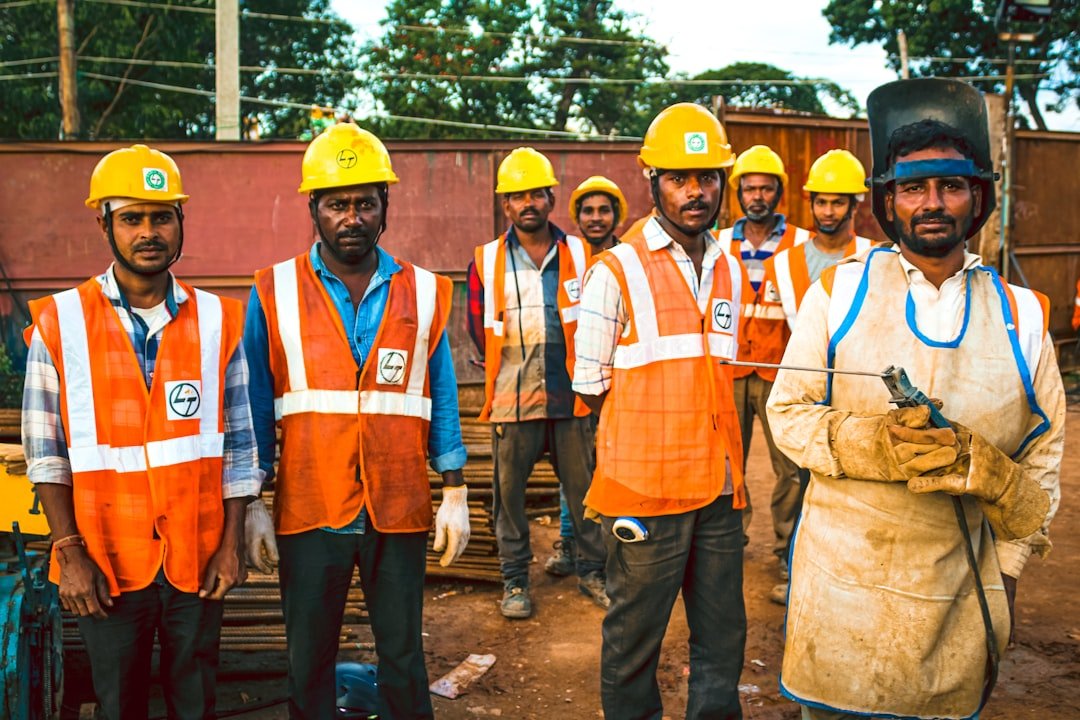
Qatar’s construction sector continues to expand through 2026, and contractors need dependable labour fast. Consequently, many Qatari employers now hire Indian construction workers to fill critical site roles. Indeed, India remains one of the largest sources of skilled trades talent for the Gulf region. Furthermore, infrastructure spending on roads, utilities, and commercial towers drives steady demand. Therefore, recruitment planning must begin months before project mobilisation. Notably, masons, steel fixers, and electricians top most manpower requests. Additionally, manpower agencies must balance speed with full regulatory compliance. Without careful planning, hiring delays can stall entire project schedules. Above all, early preparation protects both budget and timeline.
India supplies a deep pool of experienced tradespeople for GCC projects. Specifically, candidates often hold verified trade certificates and real site experience. Moreover, wages remain competitive compared with other sourcing markets. For instance, steel fixers, masons, carpenters, and electricians are consistently available. Besides, Indian workers adapt quickly to Gulf heat, safety rules, and shift patterns. Meanwhile, Qatari contractors value their reliability on long infrastructure builds. Subsequently, this combination of skills and reliability keeps demand strong across Doha and beyond.
At Allianze HR Consultancy, we’ve successfully placed 10,000+ professionals across UAE, Saudi Arabia, Qatar, and Kuwait. Furthermore, our 5+ years of GCC expertise supports clients from 50+ countries. Moreover, our Ministry of External Affairs (India) RA license ensures compliance. Besides, we manage sourcing, screening, medical testing, visa processing, and mobilisation end to end. Also, our teams monitor Qatar labour law updates continuously. Consequently, employers avoid costly compliance errors. In addition, we maintain transparent reporting at every recruitment stage. Furthermore, our professional recruitment resources help employers plan smarter. Therefore, contact our recruitment specialists for expert guidance.
Understanding GCC Construction Manpower Requirements
Qatar’s construction market keeps growing because of National Vision 2030 and major infrastructure programmes. Additionally, stadium upgrades, highways, metro extensions, and utility networks all demand large site crews. Consequently, contractors face constant pressure to source reliable tradespeople quickly.
First, employers must understand which roles drive demand. Specifically, the most requested positions include:
- Masons for blockwork, plastering, and finishing
- Steel fixers for reinforcement and structural frames
- Electricians for power, lighting, and control systems
- Carpenters and shuttering specialists for formwork
- Welders and pipe fitters for mechanical works
- General labourers for site support tasks
Second, workforce planning must align with project milestones. For instance, a single tower project may need hundreds of workers across several phases. Moreover, skilled trades take longer to source than general labour.
Third, accommodation, transport, and safety induction add real cost. Therefore, budgets must include mobilisation, housing, and food allowances. Meanwhile, World Bank labor market analysis shows Gulf demand remains resilient despite global shifts.
Finally, employers should partner with agencies that understand both source-market and destination-market rules. Thus, planning becomes predictable rather than reactive.
Hire Indian Construction Workers Strategic Overview
When employers hire Indian construction workers, strategy matters more than speed alone. Furthermore, a clear plan reduces cost, delay, and compliance risk.
First, define exact job roles and required skill levels. Specifically, separate skilled trades from semi-skilled and unskilled categories. Additionally, attach practical test criteria for masons, steel fixers, and electricians.
Second, select the right Indian sourcing states. For instance, Uttar Pradesh, Bihar, Rajasthan, Kerala, and Tamil Nadu supply strong construction talent. Moreover, regional trade training centres improve candidate quality.
Third, build a recruitment funnel with verified trade tests. Subsequently, practical assessments filter out weak candidates before medicals.
Fourth, plan accommodation and transport before arrival. Consequently, workers mobilise faster and stay longer.
Fifth, budget for visa, medical, insurance, and airfare costs. Also, include agency service fees transparently.
Notably, successful employers treat recruitment as a project, not a transaction. Specifically, they assign one point of contact for approvals. Meanwhile, they track every candidate through each stage.
For example, a Doha infrastructure contractor reduced rejection rates by 40% after adding practical trade testing. Thus, strategic planning directly improves site productivity.
Legal Framework and Compliance Standards
Qatar enforces strict labour rules, so every recruitment step must follow the law. Additionally, Indian emigration rules add a second layer of compliance. Therefore, employers who hire Indian construction workers must satisfy both sets of regulations.
First, Qatar Labour Law No. 14 of 2004 governs contracts, working hours, leave, and end-of-service benefits. Furthermore, Law No. 21 of 2015 removed the exit permit requirement for most workers. Moreover, the non-discriminatory minimum wage applies to all employees regardless of nationality.
Second, the Wage Protection System requires electronic salary transfers. Consequently, employers must register and pay on time every month.
Third, the recruitment cost rule matters greatly. Specifically, employers cannot charge workers for visa or recruitment fees. Therefore, all costs sit with the employer.
Fourth, Indian regulations apply. Particularly, the Emigration Act, 1983 and the e-Migrate system require registration through a licensed RA agency.
Fifth, safety standards protect both workers and projects. For instance, ILO international labour standards and U.S. Commerce Department labor rights guidance define core protections. Additionally, medical fitness and insurance are mandatory.
Finally, keep full documentation for inspections. Thus, audits become routine rather than disruptive.
Hire Indian Construction Workers Best Practices
Employers who recruit Indian tradespeople consistently follow a few proven practices. Furthermore, these habits reduce delays and improve retention.
First, source through licensed Indian recruitment agencies only. Additionally, verify the RA licence number before signing any agreement.
Second, run practical trade tests in India. For instance, ask masons to complete a wall sample and steel fixers to tie a beam cage. Consequently, you hire proven skills, not paper claims.
Third, screen for medical fitness early. Moreover, pre-medical checks prevent expensive repatriations later.
Fourth, issue clear contracts in a language workers understand. Specifically, include salary, hours, overtime, leave, and accommodation details. Thus, disputes decline sharply.
Fifth, arrange accommodation and transport before arrival. Also, provide a safety induction within the first week.
Sixth, assign a site supervisor who speaks Hindi or Malayalam where possible. Subsequently, communication improves and accidents reduce.
Notably, transparent communication builds trust. Besides, workers who feel respected stay longer on site.
For example, employers who pay on time and provide clean housing report far lower early-leave rates. Therefore, retention becomes a recruitment advantage.
Documentation and Processing Steps
Accurate paperwork decides whether mobilisation happens on schedule. Additionally, missing documents cause weeks of delay.
First, prepare the demand letter and employment contract. Specifically, contract terms must match Qatar Labour Law requirements.
Second, complete the Qatar work visa process. Moreover, this includes the employment visa application, Ministry of Labour approvals, and medical clearance. Additionally, UAE visa and immigration services offer useful regional comparisons for employers operating across the Gulf.
Third, register the job order with the Indian authorities. Furthermore, e-Migrate registration and RA licence verification are mandatory.
Fourth, collect candidate documents. These typically include:
- Passport with at least six months validity
- Educational and trade certificates
- Experience letters from previous employers
- Police clearance certificate
- Medical fitness certificate
- Passport-size photographs
Fifth, complete attestation and authentication. Consequently, documents gain legal validity in both countries.
Sixth, obtain the labour contract and visa stamping. Subsequently, book flights and complete immigration clearance.
Finally, deliver pre-departure orientation. Thus, workers arrive prepared for climate, culture, and safety rules.
Hire Indian Construction Workers Implementation Timeline
A realistic timeline prevents panic hiring. Therefore, employers should plan at least four to six months ahead.

Week 1-2: Requirement definition. Specifically, finalise job roles, salaries, and headcount. Also, appoint an internal coordinator.
Week 3-4: Agency selection. Furthermore, sign agreements with a licensed Indian recruiter. Additionally, confirm fee structures and service scope.
Week 5-8: Sourcing and trade testing. Moreover, candidates undergo practical skill assessments. Consequently, shortlists are ready for employer interviews.
Week 9-10: Employer interviews and selection. Subsequently, issue offer letters and collect acceptances.
Week 11-14: Medicals, police clearance, and documentation. Meanwhile, visa applications move forward.
Week 15-18: Visa approval, attestation, and labour contract signing.
Week 19-20: Ticket booking, orientation, and departure.
Week 21-22: Arrival in Qatar, accommodation, and site induction. Additionally, complete residence permit formalities.
Notably, timelines shift with trade, volume, and embassy workload. For instance, specialised electricians may take longer than general labourers. Thus, buffer time is essential.
Finally, monitor progress weekly. Consequently, small delays never become project stoppages.
Common Challenges and Solutions
Recruitment rarely runs perfectly, but most problems are predictable.
Challenge one: skill mismatch. Specifically, candidates claim experience they cannot demonstrate. Solution: mandatory practical trade tests before selection.
Challenge two: documentation delays. Moreover, missing attestation stalls visas. Solution: assign a dedicated documentation officer and track every file digitally.
Challenge three: medical failures. Consequently, replacement sourcing adds weeks. Solution: conduct pre-medical screening in India before final selection.
Challenge four: high early attrition. For instance, workers leave within months for better pay elsewhere. Solution: offer competitive wages, timely payment, and decent housing.
Challenge five: compliance breaches. Particularly, charging workers recruitment fees creates legal exposure. Solution: keep all costs with the employer and document everything.
Challenge six: communication gaps. Additionally, language barriers cause safety incidents. Solution: provide bilingual inductions and translated safety signage.
Challenge seven: rising competition for talent. Meanwhile, other Gulf markets bid for the same workers. Solution: move early and build long-term agency relationships.
Finally, address problems before they escalate. Therefore, contact our HR specialists for support at any stage.
Expert Recommendations for Success
Experienced employers follow a handful of rules that consistently produce results.
First, start early. Specifically, begin sourcing three to six months before mobilisation. Additionally, early planning secures better candidates.
Second, use licensed partners. Moreover, the Saudi Ministry of Human Resources and other GCC regulators expect fully compliant supply chains. Consequently, unlicensed intermediaries create serious risk.
Third, test skills, not just resumes. For instance, practical assessments reveal true ability quickly.
Fourth, pay fairly and on time. Furthermore, Qatar’s Wage Protection System makes this mandatory. Besides, punctual wages reduce turnover dramatically.
Fifth, invest in onboarding. Specifically, provide safety training, tools, and clear reporting lines in week one. Thus, productivity climbs faster.
Sixth, maintain long-term agency relationships. Subsequently, repeated hiring becomes faster and cheaper.
Seventh, track key metrics. Additionally, measure time-to-mobilise, rejection rate, and 90-day retention. Consequently, you improve each cycle.
Notably, workforce quality drives project quality. Therefore, treat recruitment as a strategic function.
Finally, review compliance quarterly. Thus, your business stays protected as regulations evolve.
Frequently Asked Questions About Hiring Indian Construction Workers
What is the process to hire Indian construction workers?
The process typically takes 4-8 weeks depending on country requirements. Furthermore, documentation preparation affects processing speed. Therefore, consult our specialists for accurate timelines.
What documentation is required for Indian recruitment?
Required documents include employment contracts, visa applications, medical certificates, and educational credentials. Additionally, country-specific requirements vary. Moreover, attestation procedures apply for all documents.
What are typical costs for Indian hiring services?
Costs vary by position level, country, and volume. Furthermore, visa fees, medical screening, and documentation affect total investment. Therefore, request detailed quotations for accuracy.
How does Allianze HR ensure legal compliance?
We maintain Ministry-approved RA license status under The Emigration Act, 1983. Additionally, our team monitors GCC labour law changes continuously. Moreover, we conduct thorough documentation verification at every stage.
Which GCC countries does Allianze HR serve?
We serve UAE, Saudi Arabia, Qatar, Kuwait, Bahrain, and Oman. Furthermore, our talent network spans India, Nepal, Bangladesh, Pakistan, Sri Lanka, and the Philippines.
What sectors does Allianze specialize in?
Our expertise covers construction, hospitality, healthcare, facilities management, manufacturing, oil and gas, and technical services. Additionally, we handle both skilled and semi-skilled recruitment.
Partner with Allianze HR for Construction Recruitment Success
Building a reliable site workforce in Qatar requires planning, compliance, and the right partner. Furthermore, three factors consistently decide success. First, define exact roles and test real skills. Second, follow Qatar labour law and Indian emigration rules without shortcuts. Third, mobilise workers early with proper housing and induction.
When employers hire Indian construction workers through licensed specialists, timelines shrink and compliance risk drops. Additionally, retention improves because workers receive fair treatment from day one.
At Allianze HR Consultancy, we manage the entire journey. Specifically, our Ministry of External Affairs (India) RA licence supports legal, transparent recruitment. Moreover, our 5+ years of GCC experience covers Qatar, UAE, Saudi Arabia, and Kuwait. Besides, we have placed 10,000+ professionals across construction, oil and gas, facilities management, and technical services.
Consequently, employers gain vetted candidates, verified documents, and predictable mobilisation dates. Also, our team monitors regulatory changes so you never face surprises.
Therefore, schedule consultation appointment with our specialists today. Furthermore, our professional recruitment resources help you plan every stage. Thus, your next project starts with the right crew on site. Above all, choose a partner who protects both your workers and your reputation.