


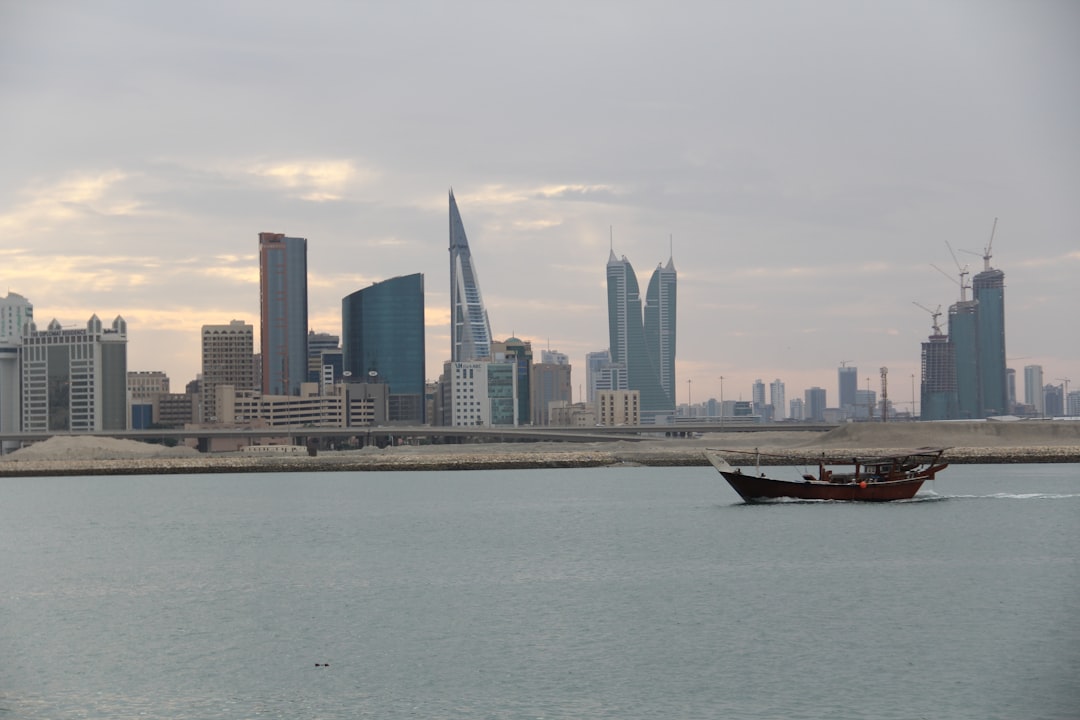
How can you ensure absolute safety compliance while executing bulk hiring for a critical project like the Bahrain LNG terminal? Furthermore, the construction of liquefied natural gas facilities presents unique, high-stakes challenges. Consequently, worker safety compliance for Bahrain LNG construction is not just a regulatory hurdle. Moreover, it is a fundamental pillar of project success, risk management, and corporate reputation. Therefore, understanding the intricate requirements for bulk hiring with mandatory safety certifications is essential.
The GCC’s energy infrastructure sector operates under intense scrutiny. Specifically, projects involving cryogenic materials and high-pressure systems demand unparalleled safety rigor. Additionally, regional authorities enforce stringent protocols to protect workers and assets. Subsequently, employers must navigate a complex web of international standards and local labor laws. This guide provides a strategic roadmap for achieving flawless safety compliance during large-scale workforce mobilization.
At Allianze HR Consultancy, we’ve successfully placed 10,000+ professionals across UAE, Saudi Arabia, Qatar, and Kuwait. Furthermore, our 5+ years of GCC expertise supports clients from 50+ countries. Moreover, our Ministry of External Affairs (India) RA license ensures compliance. Therefore, contact our recruitment specialists for expert guidance on your LNG terminal staffing needs.
Understanding High-Risk Construction Safety in Bahrain
LNG terminal construction involves significant inherent risks. These include cryogenic burns, fire and explosion hazards, and confined space entry. Furthermore, the International Labour Organization emphasizes special protections for high-risk industries. Therefore, Bahraini regulations align with these global benchmarks. Additionally, project owners often impose even stricter client-specific safety rules. Consequently, a generic safety approach fails completely.
Moreover, the local regulatory framework integrates international codes. For example, standards from NFPA, OSHA, and IEC are commonly referenced. Specifically, working with liquefied natural gas at -162°C requires specialized knowledge. Subsequently, every worker must understand material properties and associated dangers. This foundational awareness is the first critical step in risk mitigation.
- Cryogenic handling and personal protective equipment (PPE) protocols.
- Hot work permit systems and fire watch requirements.
- Confined space entry procedures and atmospheric monitoring.
- Heavy lifting and rigging safety for modular construction.
- Emergency response planning for gas leaks or ignition events.
- Strict control of ignition sources in classified zones.
Bahrain LNG Terminal Safety Strategic Overview
A strategic approach to Bahrain LNG terminal safety begins at the recruitment stage. Specifically, you cannot retrofit safety culture onto an unprepared workforce. Therefore, bulk hiring initiatives must embed safety as a core selection criterion. Moreover, a proactive strategy prevents costly incidents and project delays. This overview outlines the essential components of a successful safety-led hiring campaign.
First, define the exact certification requirements for each role. For instance, crane operators need different credentials than pipefitters. Meanwhile, all personnel will require basic site safety orientation. Subsequently, your recruitment partner must verify each certification’s validity and international recognition. Furthermore, understanding the project’s phased needs allows for staggered, safe mobilization. This planning ensures workers arrive site-ready and compliant.
- Pre-mobilization skills gap analysis and certification mapping.
- Development of a role-specific safety competency matrix.
- Integration of safety KPIs into the contractor management system.
- Strategic planning for continuous safety training cycles.
- Establishment of clear safety accountability lines from day one.
- Leveraging technology for credential tracking and management.
Legal Framework and Compliance Standards
Navigating the legal landscape is crucial for LNG projects in Bahrain. The Kingdom’s regulations are informed by both regional GCC directives and international best practices. Furthermore, the OSHA construction industry standards provide a foundational reference for many safety protocols. Additionally, Bahrain’s Ministry of Labour and Social Development sets forth specific decrees. Consequently, compliance is a multi-layered obligation.
Moreover, project financing from international institutions introduces another compliance tier. For example, lenders often require adherence to World Bank environmental and social standards. These include rigorous worker welfare and safety provisions. Therefore, your HR and HSE teams must collaborate closely. This synergy ensures every hired worker’s contract and conditions meet all applicable standards.
- Bahrain Labour Law (Law No. 36 of 2012) and its executive regulations.
- Client-specific Construction Project Safety Guidelines (CPSG).
- International Finance Corporation (IFC) Performance Standards.
- NFPA 59A: Standard for the Production, Storage, and Handling of LNG.
- Gulf Standardization Organization (GSO) safety-related standards.
- Mandatory medical fitness standards for hazardous work.
Bahrain LNG Terminal Safety Best Practices
Implementing best practices transforms safety from a checklist into a culture. For bulk hiring, this starts with pre-screening. Specifically, verify not just the existence of a safety certificate, but the quality of the training behind it. Moreover, conduct practical assessments where possible. Therefore, a worker claiming confined space certification should demonstrate competency. This practice ensures genuine skill, not just a piece of paper.
Furthermore, establish a centralized digital registry for all worker certifications. This system should track expiry dates and schedule refresher training automatically. Additionally, integrate safety performance into worker evaluations and incentives. Consequently, safe behavior receives positive reinforcement. Meanwhile, consistent mentorship and toolbox talks keep safety principles fresh. This continuous engagement is vital for long-term project safety.
- Implement behavioral-based safety observation programs from day one.
- Use virtual reality simulations for high-risk scenario training.
- Establish multi-lingual safety communication channels.
- Create peer safety champion networks within the workforce.
- Conduct rigorous pre-deployment safety inductions at source country.
- Perform regular audits of subcontractor safety management systems.
Documentation and Processing Steps
Meticulous documentation is the backbone of compliance. The process begins during candidate sourcing. First, collect and attest all educational and professional certificates. Next, gather safety training records from accredited centers. Moreover, these documents often require notarization and embassy attestation. Therefore, partnering with a knowledgeable agency streamlines this complex workflow. Subsequently, this prevents visa processing delays due to documentation errors.
Additionally, Bahrain’s immigration and labor processes require specific forms. These include the work permit application, medical screening results, and signed employment contracts. Furthermore, the World Health Organization provides guidelines for occupational health screenings. Consequently, ensure your medical testing partner follows these standards. Finally, maintain a complete digital dossier for each employee. This practice facilitates smooth audits and incident investigations.
- Original safety course certificates with detailed syllabi.
- Experience letters from previous LNG or petrochemical projects.
- Valid passport copies and biometric photographs.
- Attested medical fitness certificates for hazardous work.
- Signed job offer and final employment contract.
- Proof of attendance for project-specific safety induction.
Bahrain LNG Terminal Safety Implementation Timeline
A realistic timeline is critical for safe workforce deployment. Rushing the process compromises verification and training quality. Typically, a comprehensive bulk hiring campaign for an LNG project spans 8-12 weeks. This period allows for thorough candidate screening, certification validation, and pre-deployment training. Moreover, it accommodates the legal processing for visas and work permits. Therefore, early engagement with your recruitment partner is paramount.

First, weeks 1-2 involve finalizing the safety competency matrix and launching sourcing. Next, weeks 3-6 are for screening, testing, and interviews. Subsequently, weeks 7-9 focus on document collection, attestation, and visa filing. Meanwhile, pre-departure orientation and final safety briefings occur. Finally, weeks 10-12 see the phased mobilization of batches to site. This structured approach ensures every worker is fully compliant upon arrival.
- Phase 1 (Weeks 1-2): Planning, matrix development, and job posting.
- Phase 2 (Weeks 3-6): Active sourcing, screening, and technical assessment.
- Phase 3 (Weeks 7-9): Documentation, attestation, and visa processing.
- Phase 4 (Weeks 10-12): Pre-departure orientation and batch mobilization.
- Buffer Time: Always include a 2-week contingency for unforeseen delays.
- Post-Arrival: Site-specific induction and task-specific training before work.
Common Challenges and Proactive Solutions
Employers face several predictable challenges in this niche sector. First, counterfeit safety certificates are a prevalent risk. Solution: Verify credentials directly with the issuing training authority. Second, language barriers can dilute safety understanding. Solution: Implement training and materials in the workforce’s primary languages. Third, integrating workers from multiple subcontractors creates a inconsistent safety culture. Solution: Mandate a unified, client-led safety induction for all.
Furthermore, maintaining safety vigilance over a long project duration is difficult. Consequently, complacency can set in. Therefore, regularly refresh training and rotate safety topics. Additionally, use real incident data from the site for case study discussions. Moreover, the high-pressure environment to meet deadlines can lead to shortcuts. Hence, leadership must consistently prioritize safety over schedule. This commitment must be visible and unwavering from the top down.
- Challenge: Certification fraud. Solution: Direct verification and practical assessments.
- Challenge: Communication gaps. Solution: Multi-lingual safety officers and visual aids.
- Challenge: Subcontractor disparity. Solution: Unified safety standards and audits.
- Challenge: Complacency. Solution: Continuous engagement and incentive programs.
- Challenge: Schedule pressure. Solution: Embedding safety as a non-negotiable value.
- Challenge: High turnover. Solution: Investing in worker welfare to retain trained staff.
Expert Recommendations for Project Success
To ensure excellence, go beyond minimum compliance. First, appoint a dedicated Safety Mobilization Manager within your HR team. This role bridges the gap between recruitment and site safety. Moreover, invest in train-the-trainer programs for your core safety staff. Consequently, they can upskill the broader workforce continuously. Additionally, leverage data analytics from your safety management system. Therefore, you can identify trends and proactively address emerging risks.
Furthermore, foster a culture of psychological safety where workers report near-misses without fear. Similarly, recognize and reward safe behavior publicly. Also, engage with professional recruitment resources that specialize in high-hazard industries. Finally, conduct joint safety walks with your recruitment partner and client. This demonstrates a unified commitment and builds trust across all project tiers. Ultimately, safety is a shared responsibility that requires integrated effort.
- Integrate HSE personnel into the recruitment interview process.
- Develop a digital “passport” for each worker logging all training and competencies.
- Establish a clear, confidential reporting system for safety concerns.
- Benchmark your safety performance against global LNG project metrics.
- Conduct post-project reviews to capture lessons learned for future hiring.
- Build long-term relationships with certified training institutes.
Frequently Asked Questions About Bahrain LNG Terminal Safety
What is the timeline for Bahrain LNG terminal safety compliance hiring?
A comprehensive bulk hiring process with full safety compliance typically requires 8-12 weeks. This timeline includes candidate sourcing, certification verification, document attestation, and visa processing. Furthermore, adding pre-deployment training may extend this period. Therefore, early planning is essential for timely mobilization.
Which mandatory safety certifications are required for LNG construction workers?
Requirements vary by role but commonly include: International General Certificate in Occupational Health and Safety (NEBOSH IGC), OSHA 30-hour Construction, Confined Space Entry, Hot Work Permit, and Basic Fire Fighting. Additionally, role-specific tickets for scaffolding, rigging, or crane operation are mandatory.
How does Allianze HR verify the authenticity of safety certifications?
We employ a multi-step verification process. This includes checking certificate numbers with issuing bodies, conducting practical skill assessments, and verifying previous employer references. Moreover, we maintain a database of accredited training centers to spot fraudulent institutions.
What are the consequences of non-compliance with Bahraini safety regulations?
Non-compliance can result in severe penalties, including heavy fines, work stoppages, project blacklisting, and deportation of workers. Furthermore, it exposes the company to significant reputational damage and liability in case of incidents. Therefore, adherence is both a legal and ethical imperative.
Can workers receive safety training after arriving in Bahrain?
While site-specific orientation is mandatory upon arrival, core safety certifications must be obtained pre-deployment. Sending untrained workers to a high-risk site is a major violation. However, supplementary and refresher training is conducted continuously throughout the project lifecycle to maintain standards.
How does bulk hiring impact safety management system effectiveness?
Bulk hiring demands a scalable and robust safety management system. Effective strategies include standardized onboarding, train-the-trainer programs, and digital tracking tools. Conversely, poor planning can overwhelm site safety resources and dilute the safety culture. Hence, a phased, well-structured mobilization plan is critical.
Partner with Allianze HR for Safety-Led Recruitment Success
Securing a competent, safety-compliant workforce for your Bahrain LNG terminal project is a complex undertaking. It requires deep expertise in both GCC recruitment logistics and high-hazard industry safety standards. Throughout this guide, we’ve emphasized that worker safety compliance for Bahrain LNG construction is the non-negotiable foundation. Moreover, achieving this during bulk hiring demands a strategic, integrated approach. Therefore, partnering with a specialist ensures you meet every regulatory and operational safety benchmark.
Allianze HR Consultancy provides end-to-end workforce solutions tailored for critical infrastructure projects. Our process embeds safety verification at every stage, from sourcing to mobilization. Furthermore, our understanding of both regional employment frameworks and international safety protocols offers you a unique advantage. Consequently, you can mitigate risk, avoid delays, and foster a world-class safety culture on site. Let us help you build your project on the solid ground of compliance and care.
Ready to mobilize a safe, skilled, and compliant workforce? Contact our HR specialists today for a detailed consultation. Alternatively, schedule a consultation appointment to discuss your specific project requirements and develop a customized safety-led recruitment plan.