



Is your company attracting the right talent in the competitive GCC market? An employer brand audit assessment provides the answer. This strategic evaluation reveals how candidates and employees perceive your organization. Furthermore, it identifies critical gaps in your talent attraction strategy. Therefore, understanding your current brand perception is essential for growth.
The Gulf region’s labor market is uniquely dynamic. Moreover, competition for skilled professionals intensifies yearly. Additionally, candidate expectations evolve rapidly. Consequently, a strong employer value proposition becomes a business imperative. A systematic audit measures your brand’s real-world impact. It also uncovers opportunities to enhance your recruitment outcomes significantly.
At Allianze HR Consultancy, we’ve successfully placed 10,000+ professionals across UAE, Saudi Arabia, Qatar, and Kuwait. Furthermore, our 5+ years of GCC expertise supports clients from 50+ countries. Moreover, our Ministry of External Affairs (India) RA license ensures compliance. Therefore, contact our recruitment specialists for expert guidance on your employer brand audit assessment.
Understanding GCC Employer Reputation Management
Employer reputation directly influences hiring success in the Gulf. First, candidates extensively research companies online before applying. Second, word-of-mouth within expatriate communities carries significant weight. Third, alignment with local cultural values affects perception. Therefore, proactive reputation management is non-negotiable for regional employers.
Several factors uniquely shape employer branding in the GCC. These include compliance with International Labour Organization guidelines. Additionally, providing quality accommodation and living conditions matters. Moreover, clear career progression pathways attract top talent. Consequently, your brand must communicate stability and opportunity.
A comprehensive evaluation examines multiple reputation channels. For example, company review sites like Glassdoor offer candid feedback. Similarly, social media sentiment analysis reveals public perception. Furthermore, internal employee surveys provide crucial insights. Thus, a multi-source approach delivers the most accurate picture.
- Analyze online review ratings and response patterns.
- Monitor social media mentions and engagement metrics.
- Benchmark against key regional competitors in your sector.
- Assess the clarity of your career site and job descriptions.
- Evaluate the candidate application and interview experience.
Finally, cultural alignment remains paramount. Specifically, your brand must respect Islamic business principles. Moreover, it should demonstrate commitment to local economic visions. Therefore, partner with experts who understand these nuances deeply.
Employer Brand Audit Assessment Strategic Overview
An employer brand audit assessment is a structured diagnostic process. It systematically evaluates your talent attraction ecosystem. Furthermore, it compares internal brand messaging with external perception. Consequently, it identifies alignment gaps and improvement opportunities. This strategic overview is your roadmap to a stronger employer value proposition.
The audit framework typically encompasses four core pillars. First, the internal perspective from leadership and HR. Second, the external perception from candidates and the market. Third, the employee experience from onboarding to exit. Fourth, the digital footprint across relevant platforms. Therefore, a holistic audit touches every stakeholder group.
Conducting this evaluation delivers immediate and long-term benefits. For instance, it reduces cost-per-hire by attracting more qualified applicants. Additionally, it decreases employee turnover by aligning promises with reality. Moreover, it strengthens your competitive position in the talent market. Hence, the return on investment is substantial.
- Define clear audit objectives and key performance indicators.
- Identify all internal and external data sources for collection.
- Select appropriate research methodologies for each stakeholder group.
- Establish a baseline against industry and regional benchmarks.
- Prioritize findings based on business impact and feasibility.
Ultimately, the goal is actionable intelligence. Specifically, you need clear steps to enhance your employer brand. Moreover, you require measurable targets to track progress. Therefore, treat the audit as the first step in continuous improvement.
Legal Framework and Compliance Standards
GCC employer branding operates within a strict legal context. First, labor laws in each country dictate employment practices. Second, visa and sponsorship regulations affect the candidate experience. Third, UAE government employment regulations and similar frameworks set standards. Therefore, compliance is the foundation of a trustworthy brand.
Non-compliance risks severe reputational damage. For example, delays in salary payment generate negative publicity. Similarly, inadequate housing violates worker welfare standards. Moreover, unclear contract terms lead to disputes and poor reviews. Consequently, your audit must rigorously assess adherence to all legal requirements.
Key compliance areas impacting brand perception include wage protection systems. Additionally, end-of-service benefit calculations must be transparent. Furthermore, occupational health and safety standards are critical. Thus, candidates increasingly research a company’s compliance record.
- Verify alignment with nationalization (Nitaqat, Emiratisation) policies.
- Audit contract clarity and adherence to offer letter promises.
- Review grievance redressal mechanisms and their accessibility.
- Assess working hour regulations and overtime compensation practices.
- Evaluate health insurance coverage and medical claim processes.
Proactive compliance becomes a brand differentiator. Specifically, it signals stability and ethical operation to potential hires. Moreover, it reduces operational risk for your organization. Therefore, integrate legal adherence into your core employer value proposition.
Employer Brand Audit Assessment Best Practices
Executing a successful employer brand audit assessment requires proven methodologies. First, combine quantitative data with qualitative insights. Second, ensure anonymity to gather honest feedback. Third, analyze data against regional benchmarks from World Bank labor market reports. Therefore, follow these best practices for reliable results.
Begin with a comprehensive internal discovery phase. Interview HR teams, hiring managers, and current employees. Furthermore, review all existing employer branding collateral. Additionally, analyze recruitment metrics like source quality and offer acceptance rates. Consequently, you establish what your brand intends to project.
Next, measure external perception through targeted research. Conduct surveys with recent candidates, both successful and unsuccessful. Moreover, analyze online sentiment on professional networks. Also, facilitate focus groups with target talent demographics. Hence, you capture the market’s genuine view of your organization.
- Use standardized survey tools for consistent measurement over time.
- Conduct competitive analysis of rival employer branding activities.
- Perform a SWOT analysis on your employer brand positioning.
- Map the entire candidate journey to identify pain points.
- Benchmark employee value proposition (EVP) against market leaders.
Finally, synthesize findings into a clear gap analysis. Identify where perception diverges from intention. Prioritize gaps based on their impact on key hiring goals. Then, develop a strategic action plan with assigned owners. Thus, the audit translates directly into improved recruitment performance.
Documentation and Processing Steps
A systematic audit follows a defined sequence of steps. First, secure executive sponsorship and define the project scope. Second, assemble a cross-functional audit team. Third, collect all relevant internal documentation. Therefore, proper preparation sets the stage for meaningful insights.
Critical internal documents include recruitment marketing materials. Additionally, analyze employee handbook and policy manuals. Furthermore, review exit interview transcripts and turnover data. Also, assess onboarding program content and satisfaction surveys. Consequently, you build a complete picture of the promised employee experience.
External data collection involves several key activities. Monitor your company’s profiles on major job portals. Moreover, track media coverage and press release sentiment. Additionally, use social listening tools to capture unsolicited feedback. Thus, you gather unbiased external perspectives effectively.
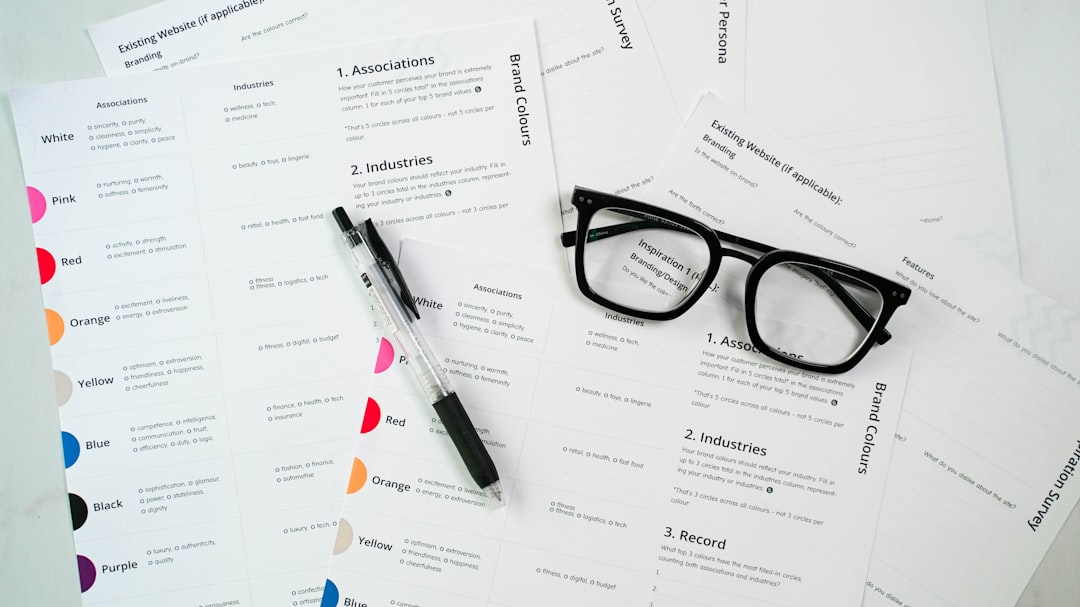
- Compile all job descriptions, career site copy, and recruitment ads.
- Gather performance management and promotion policy documents.
- Collect compensation and benefits benchmarking studies.
- Archive all employer response templates to online reviews.
- Document the structure and messaging of employer social media accounts.
Data analysis is the most crucial phase. Identify recurring themes across different data sources. Quantify sentiment where possible to track changes over time. Then, visualize data to communicate findings clearly to stakeholders. Finally, package insights into a compelling executive summary. This drives organizational commitment to necessary changes.
Employer Brand Audit Assessment Implementation Timeline
A typical employer brand audit assessment spans 6 to 10 weeks. This timeline ensures thoroughness without losing momentum. First, the planning and scoping phase takes 1-2 weeks. Second, data collection requires 2-3 weeks for comprehensive coverage. Third, analysis and reporting need another 2-3 weeks. Therefore, plan accordingly to manage stakeholder expectations.
The planning phase involves defining objectives and success metrics. Furthermore, it includes selecting research participants and designing tools. Moreover, it secures necessary budgets and resources. Consequently, skipping this step jeopardizes the entire project’s validity.
Data collection timing depends on methodology. For instance, employee surveys typically run for two weeks. Meanwhile, candidate interviews may be scheduled over three weeks. Additionally, digital analytics can cover a 90-day period for trend analysis. Hence, a phased approach prevents team burnout.
- Weeks 1-2: Project kick-off, stakeholder interviews, tool finalization.
- Weeks 3-5: Launch surveys, conduct interviews, scrape digital data.
- Weeks 6-7: Data cleansing, coding, and preliminary analysis.
- Week 8: Synthesis, gap identification, and recommendation drafting.
- Weeks 9-10: Report finalization, presentation, and action planning workshop.
Post-audit implementation follows its own timeline. First, quick wins should be executed within 30 days. Second, medium-term initiatives may take 3-6 months. Third, strategic overhauls could require 6-12 months. Therefore, view the audit as the beginning of an ongoing cycle. Regular pulse checks, perhaps annually, maintain brand health.
Common Challenges and Solutions
Employer brand audits encounter predictable obstacles in the GCC context. First, cultural reluctance to give critical feedback can skew data. Second, fragmented HR systems complicate data aggregation. Third, rapidly changing labor laws affect benchmark relevance. However, proven solutions exist for each challenge.
To overcome feedback reluctance, guarantee complete anonymity. Use third-party facilitators for interviews and focus groups. Furthermore, frame questions neutrally to avoid defensive responses. Moreover, communicate the audit’s positive purpose for improvement. Consequently, participants become more open and honest.
Data fragmentation requires a centralized audit repository. Create a single project dashboard for all collected information. Additionally, standardize data formats during the collection phase. Also, prioritize key metrics over exhaustive data perfection. Thus, you maintain progress without getting bogged down.
- Challenge: Leadership skepticism about audit value. Solution: Present case studies showing ROI on employer branding.
- Challenge: Comparing across diverse GCC countries. Solution: Use regional benchmarks while acknowledging local nuances.
- Challenge: Isolating brand impact from other hiring factors. Solution: Use controlled survey questions and correlation analysis.
- Challenge: Translating findings into actionable steps. Solution: Involve implementation teams in the analysis phase.
- Challenge: Sustaining improvement post-audit. Solution: Embed brand metrics into regular HR scorecards.
Partnering with an experienced consultancy mitigates these challenges. Experts bring proven frameworks and neutral perspectives. They also understand regional sensitivities and compliance landscapes. Therefore, consider external support for your most objective and effective audit. Access our professional recruitment resources for further guidance.
Expert Recommendations for Success
Maximize your employer brand audit assessment impact with these expert tips. First, align the audit with your overall business strategy. Second, communicate transparently with all employees throughout the process. Third, commit to acting on the findings, not just studying them. Therefore, leadership engagement is the single greatest success factor.
Integrate World Health Organization workplace standards into your wellbeing evaluation. Furthermore, consider environmental and social governance (ESG) factors. Modern talent values employers with strong ethical credentials. Moreover, highlight diversity and inclusion initiatives in your brand messaging. These elements increasingly influence candidate decisions.
Technology plays a growing role in employer branding. Utilize analytics platforms to track digital sentiment continuously. Additionally, leverage your careers page to tell authentic employee stories. Also, ensure your application process is mobile-optimized. A seamless digital experience reinforces a positive brand perception.
- Appoint a senior executive as the employer brand champion.
- Train hiring managers to be consistent brand ambassadors.
- Develop compelling employee value proposition (EVP) messaging.
- Create a content calendar for proactive brand storytelling.
- Establish a formal process for responding to online reviews.
Finally, view employer branding as a long-term investment. Audit regularly to measure progress and adapt to market shifts. Furthermore, connect brand metrics to business outcomes like productivity and innovation. Moreover, celebrate improvements to maintain organizational momentum. A strong employer brand is a sustainable competitive advantage in the GCC war for talent.
Frequently Asked Questions About Employer Brand Audit Assessment
What is the timeline for an employer brand audit assessment?
Timeline typically ranges 6-10 weeks depending on company size and scope. Furthermore, data collection and analysis require careful execution. Therefore, consult our specialists for accurate project planning.
What documentation is required for this reputation evaluation process?
Required documents include recruitment materials, HR policies, employee surveys, and turnover reports. Additionally, digital analytics and social media metrics are crucial. Moreover, competitive benchmarking data provides context.
What are typical costs for an employer branding analysis?
Costs vary by organizational complexity, geographic scope, and methodology depth. Furthermore, internal resource allocation affects the budget. Therefore, request detailed proposals from specialized HR consultancies.
How does Allianze HR ensure audit compliance with GCC laws?
We maintain Ministry-approved RA license status. Additionally, our team monitors GCC labor law changes continuously. Moreover, we integrate compliance checkpoints into every audit framework stage.
Which industries benefit most from a brand perception audit?
All sectors benefit, especially those with high talent competition. Construction, healthcare, technology, and hospitality see immediate ROI. Additionally, companies undergoing rapid growth or market entry find audits critical.
How often should we conduct an employer brand audit?
We recommend a comprehensive audit every 18-24 months. Furthermore, conduct smaller “pulse” surveys annually. Moreover, monitor key digital metrics quarterly to track sentiment trends proactively.
Partner with Allianze HR for Employer Branding Success
A robust employer brand audit assessment is the cornerstone of talent attraction. It transforms guesswork into data-driven strategy. Furthermore, it aligns your internal culture with external market perception. Moreover, it builds a foundation for sustainable recruitment success in the GCC. Therefore, investing in this diagnostic process delivers measurable competitive advantage.
The journey from audit insights to brand transformation requires expert guidance. At Allianze HR Consultancy, we combine local expertise with global best practices. Our consultants understand the nuances of Gulf labor markets. Additionally, we leverage insights from U.S. Department of Commerce trade resources and other authorities. Consequently, we provide recommendations that are both strategic and practical.
Begin strengthening your employer brand today. Let us help you evaluate perception, close gaps, and seize opportunities. Schedule consultation appointment with our employer branding specialists. Together, we can build a magnetic employer brand that attracts and retains the best talent across the GCC region.