


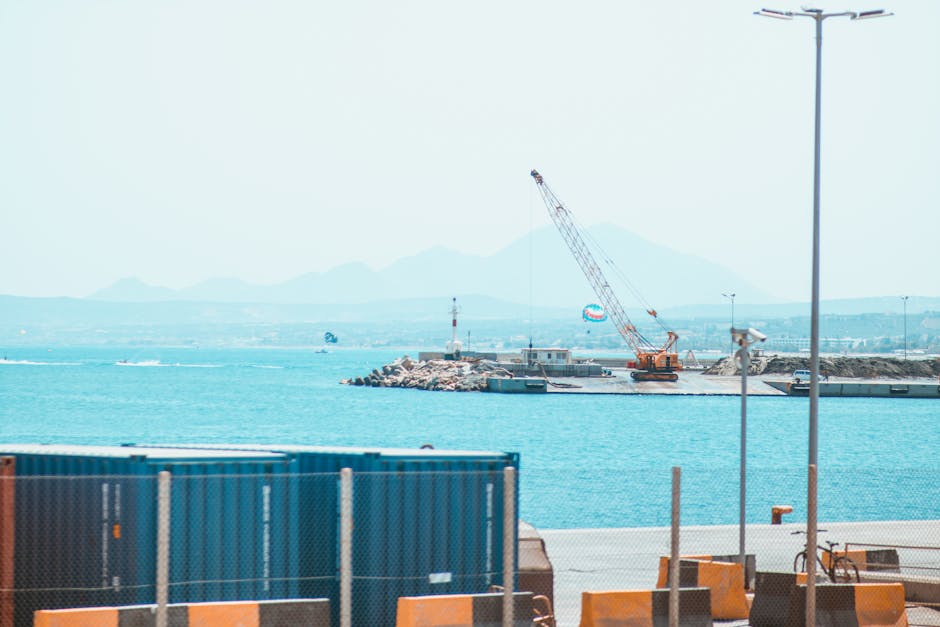
How can you overcome the immense logistical hurdles of developing a remote island like Kuwait’s Failaka? This historic island’s transformation into a major tourism and cultural hub presents a unique set of challenges for project managers and HR professionals. Furthermore, the Failaka Island construction logistics operation is a masterclass in complex, remote project execution. Consequently, success hinges on meticulous planning for workforce mobilization, material supply chains, and on-site livability. This guide provides the strategic framework needed to navigate these waters.
The development of Failaka Island is a cornerstone of Kuwait’s Vision 2035, aiming to diversify the economy. Moreover, such remote island projects differ fundamentally from mainland construction. Specifically, every resource, from a bag of cement to a skilled operator, must be transported across the sea. Additionally, worker recruitment and retention strategies must account for isolation. Therefore, understanding these unique dynamics is critical for any employer or contractor involved in this ambitious venture.
At Allianze HR Consultancy, we’ve successfully placed 10,000+ professionals across UAE, Saudi Arabia, Qatar, and Kuwait. Furthermore, our 5+ years of GCC expertise supports clients from 50+ countries. Moreover, our Ministry of External Affairs (India) RA license ensures compliance. Therefore, contact our recruitment specialists for expert guidance on mobilizing your island workforce efficiently and compliantly.
Understanding Remote Island Project Complexities
Remote island construction introduces layers of complexity absent in urban projects. First, the maritime environment dictates all planning. Weather conditions, sea states, and port limitations directly impact schedules. Second, the complete lack of local infrastructure means creating everything from scratch. This includes temporary housing, power generation, water desalination, and waste management systems before major construction even begins.
Third, the supply chain becomes a critical path item. Every piece of equipment, material, and consumable requires careful scheduling for sea transport. Additionally, storage solutions on the island are limited and costly. Consequently, just-in-time delivery is often impractical. Moreover, specialized equipment like barges, tugboats, and cranes with lifting capacity for sea transfer become essential assets. Understanding these fundamentals is the first step in mastering Failaka Island construction logistics.
- Maritime dependency for all personnel and material movement.
- Zero existing infrastructure requiring temporary establishment.
- Extended and weather-vulnerable supply chains.
- High cost of storage and inventory holding on-site.
- Need for specialized marine equipment and port operations.
Failaka Island Construction Logistics Strategic Overview
A strategic overview of Failaka Island construction logistics begins with a phased approach. Phase one always focuses on establishing the “logistics backbone.” This involves setting up a mainland marshaling yard and a dedicated island landing point. Furthermore, it requires procuring a reliable fleet of landing craft and barges. Subsequently, phase two mobilizes the workforce and their accommodation. Finally, phase three initiates the continuous flow of construction materials.
Strategic planning must also integrate risk mitigation. For instance, buffer stocks of critical materials must be maintained on the island to account for shipping delays. Additionally, alternative supply routes and backup vessels should be identified. Moreover, labor planning must include rotation schedules to prevent burnout from remote living conditions. Therefore, a robust logistics plan is not just about transport but about creating a resilient, self-sufficient operational ecosystem on Failaka.
- Phased deployment starting with logistics infrastructure.
- Establishment of mainland and island staging areas.
- Investment in or charter of a dedicated marine fleet.
- Integrated risk management for supply chain disruption.
- Workforce rotation planning for wellbeing and productivity.
Legal Framework and Compliance Standards
Navigating the legal landscape is paramount for remote projects. Kuwaiti labor law, administered by the Public Authority for Manpower, applies fully. However, additional regulations govern work in remote areas. Specifically, employer obligations for accommodation, healthcare, and transportation are heightened. Furthermore, all worker visas and residency permits must be in perfect order before mobilization to the island, as rectifying errors becomes exponentially harder.
International standards also provide crucial guidance. The International Labour Organization’s standards on occupational safety in construction are essential. Additionally, OSHA construction industry standards offer best practices for the unique hazards of a remote site. Compliance is not merely legal but a key factor in worker retention. Moreover, ensuring all contracts clearly outline remote location allowances and conditions prevents disputes.
- Strict adherence to Kuwaiti Public Authority for Manpower regulations.
- Enhanced employer obligations for remote site duty of care.
- Pre-deployment verification of all worker documentation and visas.
- Application of international safety and health standards.
- Clear contractual terms regarding isolation allowances and benefits.
Failaka Island Construction Logistics Best Practices
Implementing best practices for Failaka Island construction logistics separates successful projects from stalled ones. First, adopt a centralized logistics command center. This team coordinates all marine movements, inventory, and personnel transfers using real-time tracking. Second, standardize material packaging. Using containers and flat racks that are easy to load, secure, and offload from vessels saves immense time and reduces damage.
Third, develop strong local partnerships. Collaborating with established Kuwaiti shipping and logistics firms provides invaluable local knowledge. Fourth, prioritize worker welfare from the start. High-quality accommodation, recreational facilities, and reliable communication with families are not perks but necessities. According to the World Health Organization, mental wellbeing directly impacts productivity and safety. Therefore, a happy workforce is a productive and safe workforce.
- Establish a dedicated, technology-enabled logistics coordination hub.
- Standardize on containerized and unitized material loads for efficiency.
- Forge partnerships with experienced local maritime and supply chain operators.
- Invest in superior camp facilities focusing on comfort and connectivity.
- Implement rigorous pre-embarkation checks for materials and personnel.
Documentation and Processing Steps
Meticulous documentation is the linchpin of smooth operations. The process begins with comprehensive manpower planning lists, specifying trades, nationalities, and deployment dates. Next, all visa and work permit applications must be batch-processed to avoid staggered arrivals. Furthermore, material manifests must be meticulously prepared for customs clearance at both mainland and island points. Each shipment requires detailed packing lists, hazardous material declarations (if applicable), and destination instructions.
Additionally, personnel movement requires its own system. This includes ferry manifests, safety briefings acknowledgments, and camp assignment records. Moreover, all equipment arriving on the island needs certification and maintenance logs compliant with Kuwaiti regulations. Consequently, employing a digital document management system is highly recommended. This ensures all stakeholders—from the mainland office to the island foreman—can access necessary paperwork instantly, preventing costly delays.
- Detailed manpower mobilization schedules and visa batches.
- Precise shipping manifests and customs documentation for all cargo.
- Digital tracking of personnel movements and camp assignments.
- Centralized repository for equipment certifications and maintenance records.
- Daily logistics reports integrating weather, shipments, and workforce data.
Failaka Island Construction Logistics Implementation Timeline
Developing a realistic timeline for Failaka Island construction logistics is critical. The pre-mobilization phase typically takes 2-3 months. This involves securing vessels, setting up the marshaling yard, and recruiting the first wave of workers. Subsequently, the initial deployment phase (months 3-4) focuses on transporting camp setup crews and establishing basic infrastructure on Failaka. This includes temporary power, water, and the first accommodation blocks.

The main mobilization phase then runs from month 5 onward. During this period, the full workforce arrives in coordinated waves, and bulk material shipments commence. Importantly, the timeline must build in significant buffers—typically 15-20%—for weather delays, which are inevitable in the Gulf. Furthermore, continuous review and adjustment are necessary. Therefore, a flexible, rolling timeline managed by experienced logistics professionals is far more effective than a rigid, fixed schedule.
- Months 1-3: Planning, vessel charter, and mainland setup.
- Months 3-4: Initial island infrastructure and camp establishment.
- Month 5+: Full workforce and material supply chain activation.
- Integrated weather delay buffers of 15-20% across all marine activities.
- Regular timeline reviews and agile adjustments based on real-time progress.
Common Challenges and Proactive Solutions
Several predictable challenges arise in remote island logistics. First, weather disruptions are the most common. Proactively, invest in a robust weather monitoring system and maintain a fleet with different sea-state capabilities. Second, worker isolation can lead to morale issues. The solution is to design camp facilities with communal spaces, internet cafes, and scheduled recreational activities and family communication times.
Third, material shortages can halt progress. The mitigation strategy involves creating a “critical spares” warehouse on the island and dual-sourcing key materials where possible. Fourth, equipment breakdowns in a remote location are catastrophic. Therefore, implementing a aggressive preventive maintenance schedule and stocking essential repair parts on-site is non-negotiable. Learning from global World Bank infrastructure development reports shows that anticipating these issues is key to project resilience.
- Challenge: Weather delays. Solution: Diversified vessel fleet and schedule buffers.
- Challenge: Low morale. Solution: Premium accommodation and strong community focus.
- Challenge: Supply chain breaks. Solution: On-island buffer stock and dual sourcing.
- Challenge: Equipment failure. Solution: On-site maintenance workshop and spares.
- Challenge: Cost overruns. Solution: Detailed tracking and real-time budget dashboards.
Expert Recommendations for Success
To ensure success, follow these expert recommendations. Begin by hiring or consulting with logistics managers who have specific remote or marine project experience. Furthermore, integrate your HR and logistics teams from day one. Workforce needs directly dictate accommodation and transport schedules. Additionally, leverage technology aggressively. Use GPS tracking for vessels and shipments, and IoT sensors for material storage conditions on the island.
Moreover, build relationships with Kuwait’s relevant port and maritime authorities early. Their support is invaluable for smooth operations. Finally, never compromise on safety or wellbeing standards. The initial higher investment in quality camp facilities and reliable transport pays dividends through higher productivity, lower turnover, and an impeccable safety record. Explore our professional recruitment resources for deeper insights into workforce planning.
- Assemble a leadership team with proven remote project expertise.
- Fully integrate HR and logistics planning functions.
- Deploy technology for real-time asset and shipment visibility.
- Proactively engage local authorities and build strong partnerships.
- Prioritize investments in workforce welfare and safety above all.
Frequently Asked Questions About Failaka Island Construction Logistics
What is the timeline for Failaka Island construction logistics setup?
The initial setup typically requires 4-5 months before major construction begins. This includes establishing mainland and island logistics hubs, chartering vessels, and mobilizing the first camp construction crew. Furthermore, the full operational flow stabilizes by month 6-7. Therefore, consult our specialists for a detailed, project-specific schedule.
What are the biggest cost drivers in remote island development?
The primary cost drivers are marine transport (vessel charter and fuel), the construction and operation of temporary off-grid infrastructure (power, water, waste), and premium wages/allowances required to attract and retain skilled workers in a remote location. Additionally, buffer stock inventory adds to capital requirements.
How do you ensure worker retention on a remote project?
Retention is ensured through excellent living conditions, reliable Wi-Fi for family communication, structured recreational activities, fair rotation schedules (e.g., 8 weeks on/2 weeks off), and clear, attractive remote location allowances. Moreover, fostering a strong, respectful community on-site is crucial.
What materials are most challenging to transport?
Bulk liquids (fuel, water), pre-cast concrete elements, and heavy machinery present the greatest challenges. These require specialized vessels like tanker barges and heavy-lift ships. Furthermore, careful planning for loading, sea-fastening, and tidal-dependent offloading is essential to manage these difficult cargoes.
How does Allianze HR support such specialized recruitment?
We specialize in sourcing candidates experienced in remote or challenging project environments. Our screening process evaluates not just technical skills but also adaptability and resilience. Furthermore, we manage all pre-deployment compliance, medical checks, and travel logistics, providing a turnkey workforce solution for Failaka Island construction logistics.
What environmental considerations are unique to island projects?
Protecting marine ecosystems from runoff or spills is paramount. Additionally, waste management must be meticulously planned, as there is no municipal disposal service. Noise and light pollution must be controlled to minimize impact on local wildlife. Consequently, environmental impact assessments and mitigation plans are critical early-stage documents.
Partner with Allianze HR for Island Development Success
Mastering the complexities of Failaka Island construction logistics demands a partner with deep regional expertise and a comprehensive service model. As outlined, success hinges on integrating workforce strategy with marine transport, premium accommodation, and unwavering compliance. Furthermore, the logistical orchestration for such a remote development is a continuous, dynamic challenge. Therefore, choosing the right recruitment and logistics support partner is one of the most critical decisions you will make.
Allianze HR Consultancy provides end-to-end solutions tailored to the unique demands of island development. We handle the entire talent lifecycle—from sourcing resilient candidates to managing their deployment and welfare on-site. Moreover, our understanding of GCC regulations ensures your project remains compliant and ethical. Let us help you build the skilled, stable workforce that is the foundation of any successful project. Schedule a consultation appointment with our experts today to transform your Failaka Island vision into a logistical reality.