


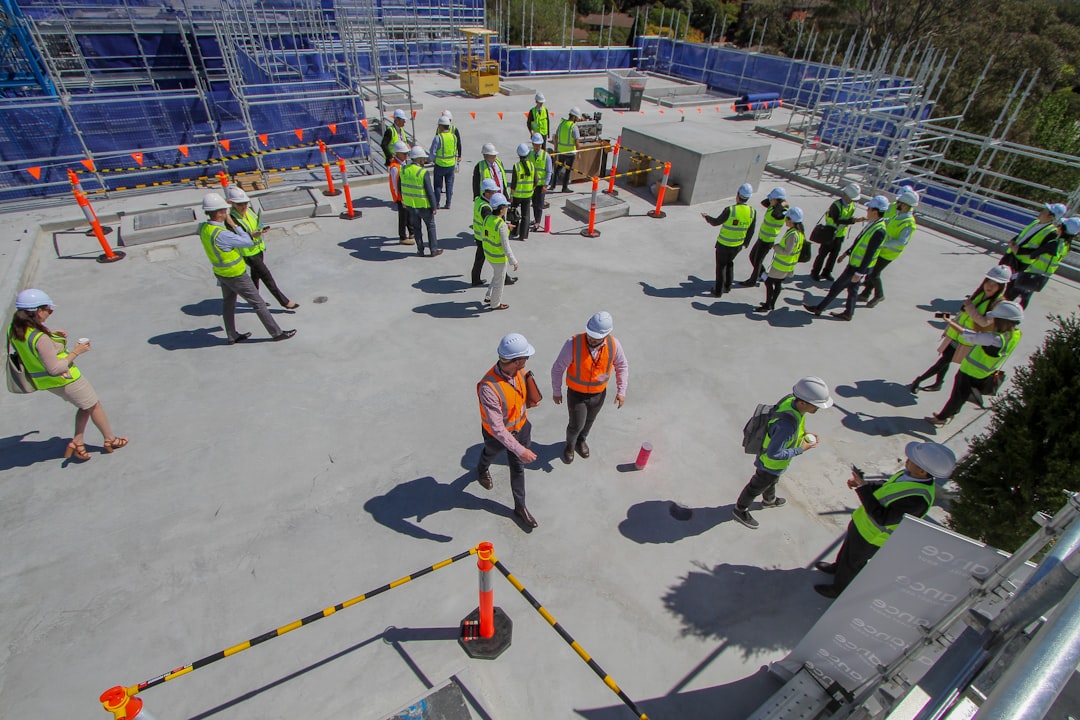
How can construction site managers in the GCC ensure worker visibility and safety in high-risk environments? The answer lies in a comprehensive understanding of high-visibility clothing construction site standards. Furthermore, the region’s rapid infrastructure growth demands strict adherence to safety protocols. Consequently, this guide provides essential insights for employers. Moreover, it covers legal requirements and best practices for implementation.
The Gulf construction sector faces unique visibility challenges. For instance, extreme heat, dust storms, and complex urban worksites create hazardous conditions. Additionally, GCC labor laws increasingly prioritize worker protection. Therefore, proper personal protective equipment (PPE) is not optional. It is a fundamental duty of care and a legal mandate for all responsible employers.
At Allianze HR Consultancy, we’ve successfully placed 10,000+ professionals across UAE, Saudi Arabia, Qatar, and Kuwait. Furthermore, our 5+ years of GCC expertise supports clients from 50+ countries. Moreover, our Ministry of External Affairs (India) RA license ensures compliance. Therefore, contact our recruitment specialists for expert guidance on staffing your projects with safety-conscious workers.
Understanding GCC Construction Safety Fundamentals
Construction safety in the Gulf region operates within a specific framework. First, national visions like Saudi Vision 2030 emphasize world-class workplace standards. Second, local municipalities enforce strict site safety regulations. Third, international project investors often require additional compliance. Therefore, a multi-layered approach to safety is essential.
High-visibility apparel serves as a critical first line of defense. It significantly reduces struck-by incidents involving vehicles and equipment. Moreover, it enhances worker recognition during low-light conditions. For example, early morning shifts, dusk, or inside poorly lit structures. Consequently, investing in quality PPE directly correlates with reduced incident rates and liability.
Key safety elements extend beyond just vests. Employers must consider comprehensive risk assessments. Additionally, regular safety training sessions are mandatory. Furthermore, proper signage and traffic management plans complement PPE. Finally, a culture of safety, championed by leadership, ensures consistent protocol adherence. This holistic approach is vital for GCC projects.
High-Visibility Clothing Construction Site Strategic Overview
Implementing an effective high-visibility clothing construction site program requires strategic planning. First, conduct a thorough hazard assessment for each worksite zone. Second, identify all personnel requiring visibility gear. This includes not only laborers but also visiting engineers, supervisors, and surveyors. Third, select the appropriate class and type of garment based on risk level.
Strategic procurement involves several considerations. Durability in extreme heat and sun exposure is paramount. Furthermore, garment comfort affects worker compliance and productivity. Additionally, standardization across the project site simplifies management. Moreover, establishing clear issue, maintenance, and replacement protocols ensures consistent protection.
Integration with other safety systems is crucial. High-visibility gear must work in tandem with hard hats, safety footwear, and harnesses. Therefore, compatibility checks are necessary. Furthermore, training must explain the purpose and limitations of the clothing. Employees should understand that high-visibility apparel is a supplement to, not a replacement for, situational awareness and safe work practices.
Legal Framework and Compliance Standards
GCC countries reference international standards while enforcing local decrees. The primary global benchmark is the ISO 20471 standard for high-visibility clothing. This standard defines three performance classes (Class 1, 2, and 3) based on minimum visible material area. Additionally, the American ANSI/ISEA 107 standard is widely recognized. Compliance with these is often a contractual requirement for major projects.
Nationally, regulations are enforced by ministries and municipalities. For instance, the UAE’s Ministry of Human Resources and Emiratisation (MOHRE) outlines general PPE requirements. Similarly, Saudi Arabia’s Ministry of Labor and the Saudi Arabian Standards Organization (SASO) provide guidelines. In Qatar, the Ministry of Labour and the Supreme Committee for Delivery & Legacy set stringent protocols. Non-compliance can result in heavy fines, work stoppages, or even project blacklisting.
Employers must maintain detailed records of PPE provision and training. This includes procurement certificates proving garment compliance with relevant standards. Furthermore, training attendance logs and equipment issue registers are critical during inspections. Consequently, a systematic documentation process is as important as the physical gear itself. This aligns with broader International Labour Organization standards for decent work.
High-Visibility Clothing Construction Site Best Practices
Adopting industry best practices maximizes the effectiveness of your high-visibility clothing construction site policy. First, mandate Class 3 garments for all workers exposed to high-risk traffic and complex backgrounds. This provides the highest level of visibility. Second, implement a “no vest, no site access” rule enforced at all entry points. Consistency in application is key to establishing a strong safety culture.
Regular inspection and maintenance of garments is essential. Faded, torn, or dirty materials lose their reflective properties. Therefore, establish a schedule for cleaning and replacement. Furthermore, consider the work environment. For example, flame-resistant (FR) high-visibility clothing may be necessary near welding or hot work areas. Additionally, ensure garments are the correct size. Ill-fitting vests can snag on machinery or fail to provide adequate coverage.
Training should be engaging and practical. Use real-site scenarios to demonstrate visibility differences. Moreover, involve workers in safety discussions to foster ownership. Finally, leadership must lead by example. When managers and visitors consistently wear the required high-visibility apparel, it reinforces its importance for everyone on site. This practice is supported by global safety authorities like the Occupational Safety and Health Administration (OSHA).
Documentation and Processing Steps
A robust documentation system underpins successful safety program management. Begin with a written PPE policy that explicitly addresses high-visibility clothing. This policy should define roles, responsibilities, and procedures. Next, create a master inventory of all high-visibility garments, noting their class, purchase date, and compliance standard. This aids in lifecycle management and audit readiness.
The issuance process must be formalized. Each worker should sign for receipt of their gear, acknowledging their responsibility for its care. Furthermore, integrate this process with onboarding. New hires should not begin work without completing safety induction and receiving their PPE kit. Additionally, maintain records of all training sessions, including content outlines and attendee lists.
Regular audits are crucial for continuous improvement. Schedule monthly inspections to check garment condition and worker compliance on site. Subsequently, use audit findings to update procurement specifications or training content. Moreover, document all corrective actions taken. This systematic approach demonstrates due diligence and a proactive commitment to safety, aligning with World Health Organization occupational health principles.
High-Visibility Clothing Construction Site Implementation Timeline
Executing a new high-visibility clothing construction site program follows a logical timeline. Week one involves policy development and stakeholder buy-in. Furthermore, week two focuses on vendor selection and bulk procurement of compliant garments. Meanwhile, parallelly, training materials for supervisors and workers should be prepared. This phased approach ensures thorough preparation.
Weeks three and four are for rollout and training. Conduct train-the-trainer sessions for site supervisors first. Subsequently, launch mandatory awareness sessions for all existing site personnel. Moreover, distribute PPE kits during these sessions with proper documentation. Finally, enforce the new policy strictly from the agreed start date. Any grace period should be minimal and clearly communicated.
Ongoing management begins from week five onward. This includes daily spot checks, monthly audits, and refresher training quarterly. Additionally, review incident reports to assess the program’s impact. Consequently, adjust practices as needed based on data and feedback. This continuous cycle ensures the program remains effective and adapts to changing site conditions, supporting the World Bank’s focus on sustainable infrastructure development.
Common Challenges and Solutions
Employers often face predictable challenges when mandating high-visibility clothing. Worker resistance due to discomfort in hot climates is frequent. The solution is to procure breathable, moisture-wicking fabrics designed for heat. Additionally, allow for regulated breaks in shaded areas. Another common issue is garment loss or misuse. Implementing a clear accountability system with replacement costs can mitigate this.
Supply chain inconsistencies present another hurdle. Sometimes, non-compliant or substandard garments enter the market. Therefore, always source from reputable suppliers who provide test certificates. Furthermore, conduct random sample checks against the claimed standards. Budget constraints may also pressure managers to opt for cheaper, lower-class gear. However, this is a false economy. The cost of a single accident far outweighs the investment in proper Class 3 protection.
Finally, maintaining consistency across subcontractors is difficult. The principal contractor must include explicit PPE specifications in all subcontract agreements. Moreover, regular joint safety walks with all subcontractor foremen ensure uniform enforcement. Consequently, these measures create a unified safety front on site, protecting everyone equally. This aligns with the UAE’s framework for construction sector welfare.
Expert Recommendations for Success
To achieve excellence in construction site visibility safety, follow these expert recommendations. First, go beyond the minimum legal requirement. If Class 2 is mandated, adopt Class 3 as your company standard. This demonstrates leadership in safety. Second, involve workers in the selection process for new gear. Their feedback on fit and comfort leads to higher compliance rates.
Third, leverage technology. Consider implementing digital tools for PPE inventory and training management. Furthermore, use data analytics from near-miss reports to identify visibility-related trends. Fourth, recognize and reward safe behavior publicly. This positive reinforcement strengthens the safety culture more effectively than punitive measures alone.
Finally, view high-visibility clothing as part of your employer brand. A safe, well-equipped site attracts and retains higher-quality talent. Moreover, it enhances your reputation with clients and regulatory bodies. Therefore, partner with a recruitment firm that understands these priorities. Allianze HR ensures the workers we place are trained and accustomed to rigorous safety environments. Explore our professional recruitment resources for more insights.
Frequently Asked Questions About High-Visibility Clothing Construction Site
What are the mandatory standards for high-visibility clothing construction site use in the GCC?
Mandatory standards typically reference ISO 20471 or ANSI/ISEA 107. Furthermore, Class 2 or 3 garments are usually required for construction. Additionally, each GCC country’s labor ministry provides specific decrees. Therefore, employers must verify both international and local regulations for full compliance.
Who is responsible for providing reflective safety vests to workers?
The employer is unequivocally responsible for providing all necessary PPE, including high-visibility clothing, at no cost to the worker. This is a fundamental requirement under GCC labor laws and international occupational safety and health conventions.
How often should high-visibility clothing be replaced?
Garments should be replaced immediately if torn, faded, or damaged. Furthermore, even with proper care, proactive replacement every 6-12 months is advisable due to UV degradation and wear. Moreover, always follow the manufacturer’s recommended service life for the specific product.
Can workers be disciplined for not wearing mandated visibility gear?
Yes, after proper training and provision of equipment, willful non-compliance can be subject to disciplinary action under company policy. However, the primary focus should be on education, positive reinforcement, and removing barriers to compliance, such as uncomfortable or ill-fitting gear.
Does high-visibility clothing require special cleaning?
Yes, following manufacturer instructions is critical. Harsh detergents, bleach, or high-temperature ironing can damage retro-reflective tape and fluorescent fabric. Typically, gentle washing and air drying are recommended to maintain the garment’s protective properties for its full lifespan.
How does Allianze HR support construction site safety compliance?
We recruit candidates who are pre-screened for safety awareness and trained in PPE usage. Furthermore, we guide employers on establishing compliant onboarding processes. Moreover, our deep understanding of GCC regulations helps clients build safer, more productive workforces from the ground up.
Partner with Allianze HR for Safety Compliance Success
Implementing a robust high-visibility clothing construction site program is a cornerstone of modern construction safety in the GCC. This guide has outlined the strategic, legal, and practical steps necessary for compliance and worker protection. Furthermore, the benefits extend beyond avoiding fines to fostering a respected, incident-free workplace. Consequently, proactive investment in visibility safety yields significant returns in productivity and reputation.
The complexity of GCC regulations requires expert navigation. Therefore, partnering with a specialized HR consultancy provides a decisive advantage. Allianze HR offers end-to-end support, from sourcing safety-conscious talent to advising on compliance frameworks. Moreover, our regional expertise ensures your policies meet both local and international standards. We help you build a culture where safety is non-negotiable.
Ready to enhance your construction site safety and compliance? Let our experts assist you in developing a tailored PPE and recruitment strategy. Contact our HR specialists today for a detailed consultation. Alternatively, schedule a consultation appointment directly to discuss your project’s specific manpower and safety needs. Protect your workforce and your project with a trusted partner.