


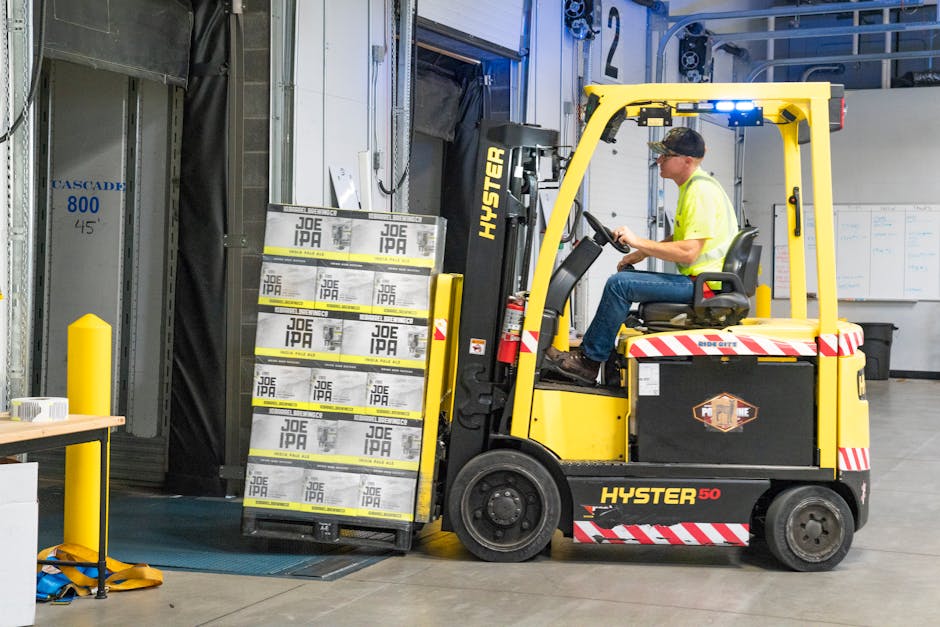
Are you struggling to build an efficient back-of-house operation for your retail or warehouse business in the GCC? The seamless flow of goods from delivery truck to sales floor hinges on one critical team: your receiving staff loading dock teams. These professionals form the backbone of retail logistics, directly impacting inventory accuracy, stock availability, and customer satisfaction. Furthermore, recruiting skilled store delivery acceptance workers in the competitive Gulf market presents unique challenges. This guide provides a strategic roadmap for employers across the UAE, Saudi Arabia, Qatar, and Kuwait.
The retail and logistics sectors in the GCC are experiencing unprecedented growth. Consequently, the demand for proficient dock and receiving personnel has surged. However, high turnover and skill gaps can disrupt supply chains. Therefore, a strategic approach to recruitment and team management is not just beneficial—it’s essential for operational continuity. Moreover, understanding regional labor laws and cultural dynamics is paramount for long-term success.
At Allianze HR Consultancy, we’ve successfully placed 10,000+ professionals across UAE, Saudi Arabia, Qatar, and Kuwait. Furthermore, our 5+ years of GCC expertise supports clients from 50+ countries. Moreover, our Ministry of External Affairs (India) RA license ensures compliance. Therefore, contact our recruitment specialists for expert guidance on building your logistics workforce.
Understanding GCC Logistics Workforce Requirements
GCC logistics operations demand specific skill sets. First, receiving staff must handle diverse product categories. Additionally, they need proficiency with inventory management systems. Moreover, physical stamina is crucial for manual handling tasks. Consequently, a clear job profile is the foundation of effective recruitment.
Regional factors significantly influence staffing. For example, multilingual abilities are often necessary. Furthermore, understanding local safety protocols is mandatory. Also, adaptability to fast-paced retail environments is key. Therefore, sourcing candidates with relevant regional experience offers immediate advantages.
Operational requirements extend beyond basic unloading. Staff must verify shipment accuracy against purchase orders. They also manage returns and damaged goods processing. Moreover, they coordinate closely with inventory control teams. Finally, maintaining a clean and safe dock area is a continuous duty.
- Inventory system operation and barcode scanning.
- Manual handling and pallet jack operation certification.
- Basic English and Arabic communication skills.
- Understanding of GCC-specific customs documentation.
- Ability to work in varied temperature environments.
Receiving Staff Loading Dock Teams Strategic Overview
A strategic approach to your receiving staff loading dock teams transforms logistics from a cost center to a value driver. First, define clear roles within the team structure. For instance, separate functions for unloading, checking, and staging. This specialization enhances efficiency and accountability. Moreover, it creates clear career progression paths.
Technology integration is now fundamental. Modern teams use RFID scanners and warehouse management software. Furthermore, real-time data entry prevents inventory discrepancies. Consequently, training must include digital tool proficiency. Additionally, leveraging data analytics can predict staffing needs for peak delivery periods.
Team composition requires careful planning. Balance experienced workers with trainable new hires. Furthermore, consider shift patterns that align with delivery schedules. Also, implement cross-training to ensure coverage. Therefore, a resilient team can adapt to absences or sudden volume spikes.
- Develop tiered roles: Associate, Specialist, Lead.
- Integrate WMS and handheld device training.
- Create shift schedules aligned with supplier deliveries.
- Establish key performance indicators for productivity.
- Implement a continuous improvement feedback loop.
Legal Framework and Compliance Standards
GCC labor laws establish strict requirements for all workers, including logistics staff. First, employment contracts must be clear and attested. Additionally, work hours and overtime compensation are regulated. Moreover, specific safety standards for manual handling apply. Therefore, non-compliance risks significant penalties.
Visa and sponsorship processes vary by country. For example, Saudi Arabia’s Qiwa platform manages labor contracts. Conversely, the UAE uses the Ministry of Human Resources and Emiratisation systems. Furthermore, medical testing and insurance are mandatory steps. Consequently, employers must navigate these bureaucracies efficiently.
Worker welfare is a critical compliance area. The International Labour Organization standards influence regional policies. Additionally, local ministries enforce accommodation and transportation rules. Also, occupational health standards prevent workplace injuries. Thus, proactive compliance protects both workers and employers.
- Secure proper work permits and residency visas.
- Provide approved accommodation and transportation.
- Adhere to mandated break periods and shift lengths.
- Maintain comprehensive insurance coverage.
- Conduct regular safety training and equipment checks.
Receiving Staff Loading Dock Teams Best Practices
Implementing best practices for your receiving staff loading dock teams ensures operational excellence. First, standardize the receiving process with clear checklists. This reduces errors and speeds up training. Moreover, it creates consistency across shifts and team members. Therefore, process documentation is a vital first step.
Safety must be the foremost priority. The OSHA warehousing industry standards provide a strong framework. Furthermore, conduct daily safety briefings and equipment inspections. Also, enforce proper personal protective equipment usage. Consequently, a safe dock is a productive and compliant dock.
Performance management drives continuous improvement. Establish metrics like units processed per hour and error rates. Furthermore, provide regular, constructive feedback to team members. Additionally, recognize and reward top performers. Therefore, a culture of accountability and excellence flourishes. For deeper insights, explore our professional recruitment resources.
- Implement a standardized “Unload-Check-Stage” protocol.
- Use visual management tools for dock status.
- Conduct bi-annual skills assessments and refresher training.
- Establish a clear incident reporting and investigation process.
- Foster communication between dock staff and inventory control.
Documentation and Processing Steps
Accurate documentation is the linchpin of effective receiving operations. First, the Bill of Lading must be matched with the purchase order. Any discrepancies require immediate notation and supervisor sign-off. Moreover, digital systems should capture this data in real time. Therefore, inventory records remain accurate from the moment goods arrive.
Internal processing involves several critical steps. Damaged goods need separate documentation and quarantine. Furthermore, high-value items often require additional verification. Also, returns to vendors need precise paperwork. Consequently, training must cover all these document types. The UAE employment regulations also mandate specific record-keeping for payroll and attendance.
Compliance documentation extends beyond daily receipts. Maintain files for each employee’s contract, visa, and medical records. Furthermore, keep training certifications and equipment inspection logs. Additionally, safety meeting minutes demonstrate due diligence. Thus, organized documentation simplifies audits and legal reviews.

- Digital capture of POD signatures and timestamps.
- Immediate discrepancy reporting via standardized forms.
- Secure archiving of attested employment contracts.
- Maintenance of training and certification registers.
- Regular audits of personnel and process documentation.
Receiving Staff Loading Dock Teams Implementation Timeline
A structured timeline is crucial for deploying effective receiving staff loading dock teams. The first phase involves needs analysis and job profiling. This typically takes one to two weeks. Furthermore, it includes consulting with logistics and store managers. Therefore, the recruitment strategy aligns with actual operational demands.
Recruitment and selection form the second phase. Sourcing candidates can take 2-4 weeks. Subsequently, screening and interviews require another 1-2 weeks. Moreover, visa and document processing for selected candidates adds 3-6 weeks. Consequently, the total hiring timeline often spans 6-12 weeks. Planning for this lead time prevents operational gaps.
Onboarding and integration are the final phases. Orientation and safety training take the first week. Furthermore, shadowing experienced staff lasts 1-2 weeks. Additionally, performance evaluation occurs after the first month. Therefore, full proficiency is typically achieved within 8-10 weeks of joining. To begin, schedule a consultation appointment with our team.
- Weeks 1-2: Needs Assessment & Job Description Finalization.
- Weeks 3-6: Candidate Sourcing, Screening, and Interviews.
- Weeks 7-12: Offer, Visa Processing, and Mobilization.
- Weeks 13-14: Company Orientation and Compliance Training.
- Weeks 15-18: On-the-Job Training and Performance Review.
Common Challenges and Solutions
Employers frequently face high turnover in dock positions. Often, this stems from inadequate training or unclear career paths. The solution involves creating a structured progression ladder. Furthermore, investing in skills development increases engagement. Moreover, competitive compensation and recognition programs reduce attrition.
Communication barriers can disrupt operations. Teams often comprise multiple nationalities. Therefore, implementing visual work instructions and basic language training is effective. Additionally, appointing team leads with strong multilingual skills bridges gaps. Consequently, safety and efficiency improve significantly.
Seasonal demand spikes strain existing teams. Planning for peak periods like Ramadan sales or holiday seasons is essential. One solution is to maintain a pool of pre-vetted temporary staff. Alternatively, cross-train staff from other departments. Thus, flexibility is built into the workforce model. Resources from the World Bank trade and logistics reports can inform scaling strategies.
- Challenge: High turnover. Solution: Career pathing and skill certification.
- Challenge: Inventory shrinkage. Solution: Audited processes and CCTV oversight.
- Challenge: Safety incidents. Solution: Regular drills and safety committees.
- Challenge: Vendor compliance. Solution: Clear delivery windows and pre-advice requirements.
- Challenge: Technology adoption. Solution: Phased training and super-user mentors.
Expert Recommendations for Success
Proactive engagement with regulatory bodies is advised. Regularly review updates from ministries of labor. Furthermore, participate in industry forums on logistics standards. Additionally, building relationships with free zone authorities can streamline processes. Therefore, you stay ahead of compliance changes.
Invest in technology that provides a clear return. Warehouse Management Systems are essential for scale. Moreover, consider wearable technology for hands-free operation. Also, data analytics can optimize staffing schedules. Consequently, technology becomes a force multiplier for your team. The World Health Organization occupational health guidelines also recommend ergonomic assessments for repetitive tasks.
Finally, view your dock team as a strategic asset, not just labor. Involve them in process improvement discussions. Furthermore, measure and share performance metrics transparently. Additionally, celebrate team successes to build morale. Therefore, you cultivate a dedicated, efficient, and stable logistics workforce.
- Conduct quarterly compliance audits with expert partners.
- Benchmark wages and benefits against local market data.
- Develop a pipeline of talent through vocational institute partnerships.
- Implement a digital knowledge base for procedures and troubleshooting.
- Schedule regular leadership training for dock supervisors.
Frequently Asked Questions About Receiving Staff Loading Dock Teams
What is the timeline for receiving staff loading dock teams recruitment?
The complete timeline typically ranges from 6 to 12 weeks. Furthermore, this includes job profiling, candidate sourcing, interviews, and visa processing. Moreover, country-specific regulations affect the duration. Therefore, consult our specialists for a precise project plan.
What documentation is required for dock worker recruitment?
Essential documents include attested educational certificates, previous experience letters, passport copies, and medical fitness reports. Additionally, employer-specific documents like labor contracts and visa applications are mandatory. Moreover, safety training certifications may be required.
What are the key skills to look for in delivery acceptance workers?
Prioritize physical stamina, attention to detail, and basic numeracy. Furthermore, experience with inventory scanners or forklifts is valuable. Also, teamwork and communication abilities are crucial. Consequently, a balanced skill set ensures both efficiency and safety.
How does Allianze HR ensure legal compliance for logistics staff?
We maintain a Ministry-approved RA license under The Emigration Act, 1983. Additionally, our team monitors GCC labor law changes continuously. Moreover, we conduct thorough documentation verification at every recruitment stage. Therefore, we ensure fully compliant deployments.
Can you help with bulk hiring for multiple retail locations?
Absolutely. We specialize in volume recruitment for retail chains and logistics hubs. Furthermore, we manage simultaneous hiring for different GCC countries. Moreover, we standardize processes while meeting local regulatory requirements. Thus, we ensure consistent quality across all your locations.
What industries does Allianze specialize in for recruitment?
Our expertise covers retail, logistics, warehousing, facilities management, and construction. Additionally, we handle both skilled and semi-skilled worker recruitment across all sectors. Moreover, our deep network spans key sourcing countries in South Asia.
Partner with Allianze HR for Logistics Recruitment Success
Building and managing high-performing receiving staff loading dock teams is a complex but rewarding endeavor. First, it requires a blend of strategic planning, compliance knowledge, and human resources expertise. Furthermore, the dynamic GCC market demands a partner who understands regional nuances. Therefore, a specialized recruitment consultancy provides a decisive advantage.
Allianze HR Consultancy delivers end-to-end solutions for your back-of-house staffing needs. We manage the entire recruitment lifecycle, from sourcing to mobilization. Moreover, our compliance-first approach protects your business from legal risk. Additionally, our focus on candidate quality ensures long-term retention and productivity. Consequently, you gain a reliable, efficient logistics team without the administrative burden.
Do not let staffing challenges hinder your retail or warehouse operations. Investing in a professional receiving team directly impacts your bottom line through reduced shrinkage, faster stock turnover, and improved store performance. Take the first step toward operational excellence today. Contact our HR specialists for a customized consultation and discover how we can streamline your store delivery acceptance worker recruitment and build a team that drives your business forward.