


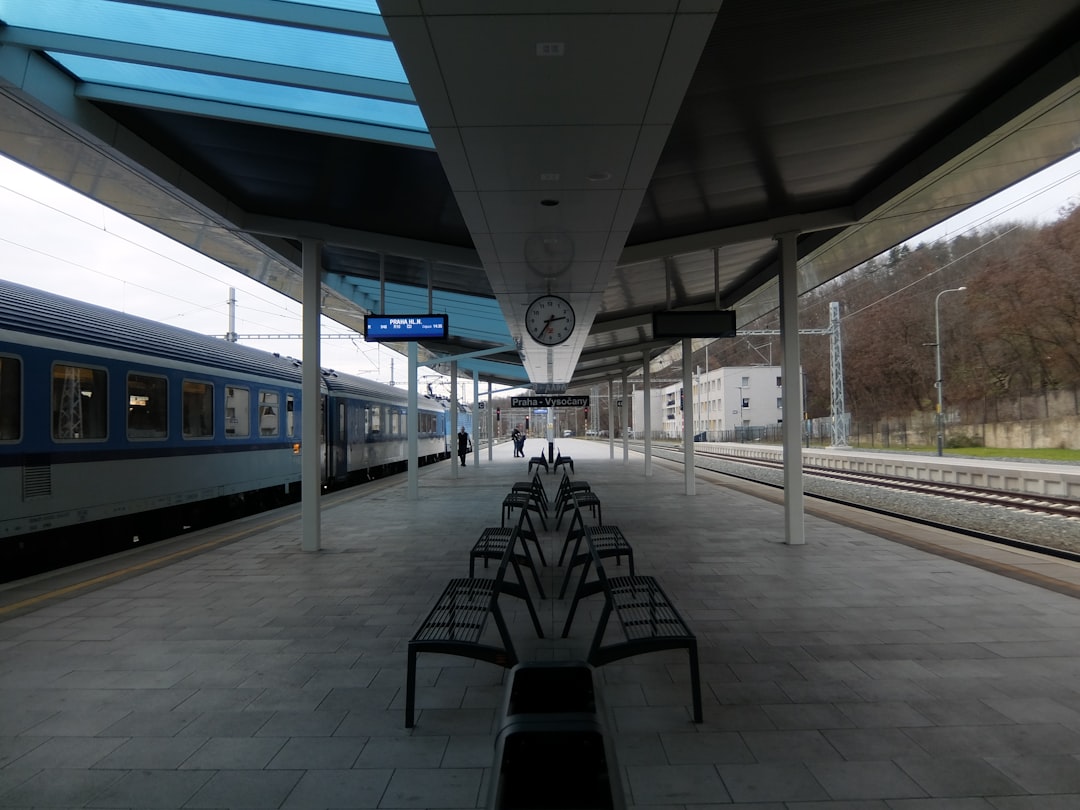
How can GCC rail operators ensure world-class facility management while prioritizing passenger safety? The rapid expansion of metro and rail networks across the Gulf Cooperation Council demands specialized expertise. Consequently, building and managing effective train station FM rail management teams becomes a critical strategic priority. This guide provides a comprehensive framework for railway property maintenance staffing with an unwavering focus on safety and operational excellence.
Railway facilities represent complex, high-traffic environments requiring 24/7 operational readiness. Furthermore, GCC projects like the Riyadh Metro, Doha Metro, and Etihad Rail network create immense demand for skilled FM professionals. These teams manage everything from platform maintenance to critical system oversight. Therefore, strategic staffing directly impacts service reliability, passenger experience, and public safety.
At Allianze HR Consultancy, we’ve successfully placed 10,000+ professionals across UAE, Saudi Arabia, Qatar, and Kuwait. Furthermore, our 5+ years of GCC expertise supports clients from 50+ countries. Moreover, our Ministry of External Affairs (India) RA license ensures compliance. Therefore, contact our recruitment specialists for expert guidance on building your rail facility management workforce.
Understanding GCC Railway Facility Management Requirements
Railway facility management in the Gulf region presents unique challenges and opportunities. First, extreme climate conditions demand robust maintenance protocols for tracks, signaling, and station buildings. Second, high passenger volumes during peak hours require impeccable crowd management and safety procedures. Additionally, integration with other transit modes like buses and taxis adds operational complexity.
Key staffing considerations include technical certifications, safety training, and cultural adaptability. For example, technicians must understand both international rail standards and local GCC regulations. Moreover, supervisory roles require crisis management skills for emergency scenarios. Consequently, recruitment must prioritize both hard technical skills and soft operational competencies.
- Platform and concourse maintenance specialists
- Electromechanical systems technicians for escalators and elevators
- Rail track and right-of-way inspection teams
- Environmental services and waste management staff
- Security and passenger flow coordination personnel
Successful railway FM operations depend on this multidisciplinary approach. Therefore, employers must develop detailed competency frameworks for each role. Furthermore, continuous training programs ensure teams adapt to new technologies and safety protocols.
Train Station FM Rail Management Strategic Overview
Effective train station FM rail management requires a holistic, integrated strategy. This approach connects daily maintenance with long-term asset preservation and passenger safety outcomes. First, define clear operational objectives aligned with network performance metrics. Second, establish accountability structures across all maintenance and staffing functions. Third, implement technology-enabled monitoring for proactive issue resolution.
A strategic overview must balance reactive repairs with preventive maintenance schedules. For instance, nightly track inspections prevent daytime service disruptions. Similarly, planned overhaul of HVAC systems avoids passenger discomfort during peak summer months. Moreover, integrating with International Facility Management Association best practices ensures global standards are met.
- Develop a centralized asset register and maintenance history database
- Implement predictive maintenance using IoT sensors and data analytics
- Establish clear communication protocols between FM teams and rail operations
- Create redundancy plans for critical system failures
- Align staffing levels with passenger traffic patterns and maintenance windows
Ultimately, strategy translates into daily operational excellence. Therefore, leadership must champion a safety-first culture across all railway property maintenance activities. Subsequently, this focus minimizes risks and enhances the passenger journey.
Legal Framework and Compliance Standards
GCC rail operators must navigate a complex web of international and local regulations. Compliance begins with understanding each country’s specific rail safety authority mandates. For example, the UAE’s Federal Transport Authority – Land & Maritime sets stringent guidelines. Similarly, Saudi Arabia’s Transport General Authority oversees all railway operations and safety standards.
International standards also play a crucial role. Specifically, ISO 55000 for asset management and ISO 45001 for occupational health provide essential frameworks. Additionally, adherence to International Labour Organization workplace safety conventions is mandatory for worker protection. Furthermore, local civil defense regulations govern fire safety and emergency egress within stations.
- National rail safety regulations and periodic audit requirements
- Building and construction codes for station facilities
- Environmental regulations for noise, vibration, and waste management
- Electrical and mechanical safety standards for all systems
- Public health guidelines for sanitation and indoor air quality
Non-compliance carries significant financial and reputational risks. Therefore, FM staffing plans must include roles dedicated to compliance monitoring and reporting. Moreover, regular training updates ensure all personnel understand evolving legal obligations.
Train Station FM Rail Management Best Practices
Implementing proven best practices elevates the effectiveness of any train station FM rail management program. First, adopt a risk-based maintenance prioritization model. This approach focuses resources on assets critical to safety and operational continuity. Second, foster cross-functional collaboration between engineering, cleaning, security, and operations teams.
Technology integration represents another critical best practice. For instance, computerized maintenance management systems (CMMS) streamline work orders and inventory. Additionally, mobile platforms enable real-time reporting of issues by staff and passengers. Moreover, leveraging data from World Health Organization indoor air quality guidelines helps manage station environments.
- Conduct daily safety briefings and toolbox talks for all FM staff
- Implement a “see something, say something” culture for hazard reporting
- Use standardized checklists for routine inspections of platforms and systems
- Establish key performance indicators (KPIs) for maintenance response times
- Develop a continuous improvement program based on incident analysis
These practices create a resilient and responsive FM operation. Consequently, passenger safety and asset reliability improve significantly. Furthermore, a structured approach provides clear benchmarks for staff performance and development.
Documentation and Processing Steps for FM Staffing
Robust documentation forms the backbone of compliant railway FM staffing. The process begins with detailed job descriptions outlining safety-critical responsibilities. Next, credential verification ensures all candidates possess required certifications. Additionally, employment contracts must clearly define roles, duties, and compliance obligations.
Visa and labor processing follows strict GCC protocols. Specifically, employers must secure quotas, submit medical screenings, and obtain necessary security clearances. Moreover, alignment with UAE green building regulations may be required for certain technical roles. Therefore, partnering with an experienced recruiter streamlines this complex administrative burden.
- Technical qualification certificates and trade licenses
- Previous employer references and safety performance records
- Medical fitness certificates for working in rail environments
- Security clearance approvals from relevant authorities
- Training records on rail-specific safety procedures
Proper documentation mitigates legal and operational risks. Furthermore, it ensures a smooth onboarding process for new hires. Consequently, teams can deploy quickly and operate safely from their first day on the job.
Train Station FM Rail Management Implementation Timeline
A realistic implementation timeline for train station FM rail management staffing typically spans 8 to 12 weeks. First, the planning and job specification phase requires 2-3 weeks. This stage involves workflow analysis and role definition. Second, candidate sourcing and screening takes approximately 3-4 weeks to identify qualified talent.
The final stages involve visa processing, mobilization, and onboarding. Specifically, visa issuance and medical checks require 2-3 weeks depending on the GCC country. Subsequently, orientation and site-specific safety training demand another 1-2 weeks. Moreover, integrating with existing World Bank urban development project timelines may influence scheduling.
- Weeks 1-3: Needs assessment, job description finalization, and recruitment planning
- Weeks 4-7: Candidate sourcing, interviews, technical assessments, and selection
- Weeks 8-9: Offer issuance, contract signing, and document attestation
- Weeks 10-11: Visa processing, medical examinations, and travel arrangements
- Week 12: Arrival, onboarding, system training, and supervised deployment
Adhering to this structured timeline ensures a methodical and compliant staffing process. Therefore, rail operators can plan their operational ramp-up with confidence. Furthermore, it allows for contingency planning around any procedural delays.
Common Challenges and Strategic Solutions
GCC employers face several common challenges in railway FM staffing. First, finding technicians with specific rail system experience can be difficult. Second, retaining skilled staff in a competitive market requires strategic incentives. Third, ensuring continuous compliance with evolving safety regulations demands constant vigilance.
Effective solutions begin with proactive talent pipeline development. For example, partnerships with technical institutes can create specialized training programs. Additionally, implementing clear career progression paths enhances retention. Moreover, regular compliance audits and training updates, informed by World Health Organization occupational health resources, mitigate regulatory risks.
- Challenge: High turnover of skilled FM technicians. Solution: Competitive compensation packages and recognition programs.
- Challenge: Language barriers in multicultural teams. Solution: Mandatory safety instruction in multiple languages and visual guides.
- Challenge: Integrating new staff with legacy systems. Solution: Comprehensive onboarding with hands-on shadowing periods.
- Challenge: Managing maintenance during limited operational hours. Solution: Advanced planning and efficient work package preparation.
- Challenge: Budget constraints for training and technology. Solution: Phased investment plans aligned with lifecycle cost savings.
Addressing these challenges head-on strengthens the entire FM operation. Consequently, passenger safety and asset performance reach optimal levels. Furthermore, a resilient workforce becomes a key competitive advantage for the rail operator.
Expert Recommendations for FM Staffing Success
To achieve excellence in railway facility management, GCC employers should adopt several expert recommendations. First, prioritize safety competency over all other hiring criteria. Second, invest in continuous professional development for all FM staff. Third, leverage technology to augment human capabilities and decision-making.
Building a strong partnership with a specialized recruitment firm like Allianze HR provides significant advantages. Specifically, we offer access to pre-vetted talent pools with relevant rail experience. Additionally, our expertise in GCC labor law ensures full compliance throughout the hiring process. Moreover, our professional recruitment resources support ongoing workforce planning.
- Conduct regular skills gap analyses to inform recruitment strategy
- Develop a mentorship program pairing new hires with experienced personnel
- Implement a digital twin of station facilities for training and scenario planning
- Establish a safety committee with representation from all FM staff levels
- Benchmark performance against international rail industry standards
These recommendations create a sustainable model for staffing success. Therefore, rail operators can deliver reliable, safe, and efficient passenger services. Furthermore, a strategic approach to talent management future-proofs the organization against emerging challenges.
Frequently Asked Questions About Train Station FM Rail Management
What is the timeline for train station FM rail management staffing?
The complete staffing timeline typically ranges from 8 to 12 weeks. This period covers planning, recruitment, visa processing, and onboarding. Furthermore, specific GCC country regulations can affect processing speed. Therefore, consult our specialists for a precise project estimate.
What certifications are required for railway maintenance technicians?
Required certifications vary by role but often include electrical safety, welding, HVAC, and rail-specific safety training. Additionally, country-specific trade licenses are mandatory. Moreover, certifications from recognized international bodies enhance candidate suitability for complex systems.
How do you ensure passenger safety during maintenance work?
Strict permit-to-work systems, physical barriers, and clear signage isolate work zones. Furthermore, all work is scheduled during off-peak or service closure hours whenever possible. Additionally, continuous coordination with station control centers ensures real-time safety monitoring.
What are the key differences between standard FM and rail FM?
Rail facility management operates under stricter safety regulations, 24/7 operational demands, and interfaces with moving trains. Additionally, it requires knowledge of specialized rail systems like signaling and track geometry. Moreover, emergency response protocols are more rigorous due to public passenger volumes.
Can Allianze HR source talent for specialized rail systems?
Yes, our global talent network includes professionals experienced in metro, light rail, and mainline railway systems. Furthermore, we conduct technical assessments to verify expertise in specific technologies. Moreover, we maintain a database of candidates with proven GCC rail project experience.
How is performance measured for railway FM teams?
Key performance indicators include mean time to repair, preventive maintenance compliance, safety incident rates, and passenger facility satisfaction scores. Additionally, asset uptime and budget adherence are critical metrics. Furthermore, regular audits ensure continuous improvement against these benchmarks.
Partner with Allianze HR for Railway FM Success
Building a high-performing train station FM rail management team is a complex but achievable goal. This guide has outlined the strategic, compliance, and operational pillars required for success. Furthermore, a focus on passenger safety must underpin every staffing and maintenance decision. Consequently, the right talent strategy directly impacts service reliability and public trust.
Allianze HR Consultancy offers the specialized expertise needed to navigate this landscape. Our deep understanding of GCC labor markets and rail industry requirements ensures compliant, effective staffing solutions. Moreover, our end-to-end recruitment process manages everything from sourcing to mobilization. Therefore, you can focus on core operations while we build your ideal facility management team.
Ready to enhance your railway property maintenance and passenger safety outcomes? Let’s discuss your specific staffing requirements. Schedule a consultation appointment with our rail sector specialists today. Together, we can develop a tailored workforce plan that delivers operational excellence and peace of mind.