


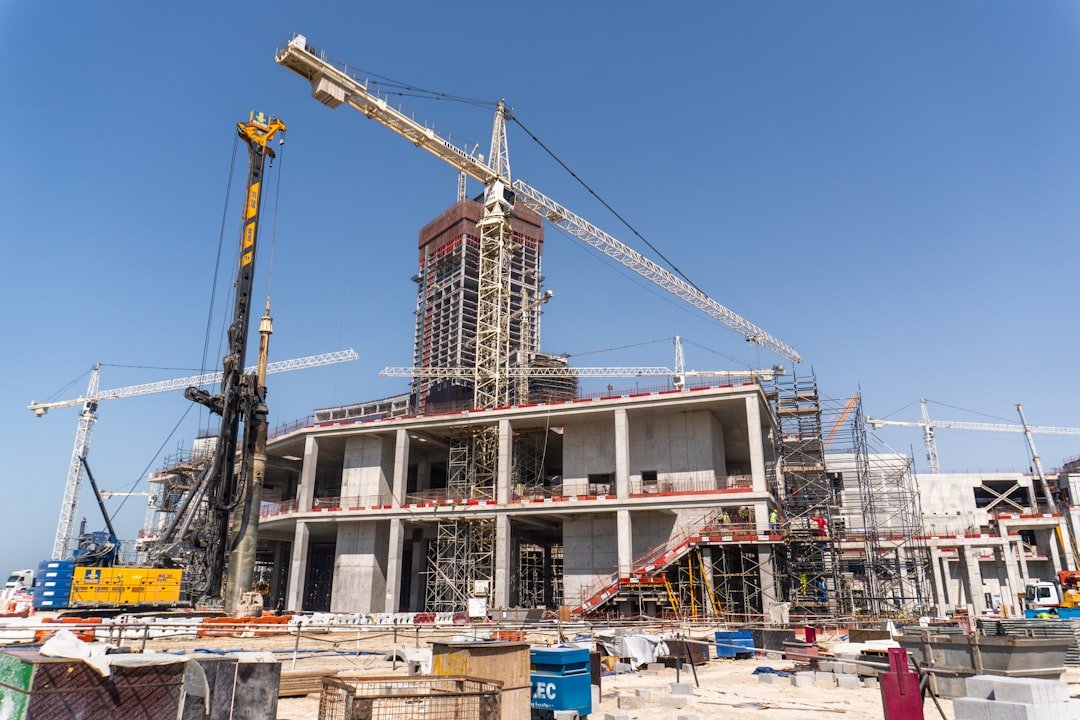
The GCC Construction Labor Shortage in 2026 is redefining how European, Russian, and Gulf employers allocate budgets. Consequently, wage inflation for masons, carpenters, and drivers accelerates across UAE, Saudi Arabia, and Qatar. Furthermore, mega-projects like NEOM, Qiddiya, and Dubai’s urban expansion intensify competition for skilled trades. Therefore, companies must adopt data-driven compensation strategies. Indeed, the shortage affects every stage of project delivery, from foundation works to finishing. Hence, understanding regional salary trends is essential for accurate workforce budgeting. Additionally, workforce planners must monitor monthly pay movements. Specifically, masons now command premium rates in Riyadh.
Moreover, geopolitical shifts influence expatriate labor flows. For instance, Russian contractors face sanctions-driven restrictions, while Central Asian workers seek Gulf opportunities. Additionally, Saudi Arabia’s giga-projects demand 500,000 workers by 2026. Thus, compensation packages must reflect market realities. Notably, drivers face rising demand due to logistics expansion. Therefore, employers must benchmark salaries regularly to remain competitive. Besides, carpenters with formwork expertise are scarce in Doha. Furthermore, Qatar’s stadium retrofits add pressure to hospitality and construction labor pools. Consequently, salary differentials between GCC states continue to widen. Meanwhile, Kuwait’s infrastructure spending creates additional recruitment demand. Similarly, Oman’s port projects attract foreign investment.
At Allianz HR Consultancy, we’ve successfully placed 10,000+ professionals across UAE, Saudi Arabia, Qatar, and Kuwait. Furthermore, our 5+ years of GCC expertise supports clients from 50+ countries. Moreover, our Ministry of External Affairs (India) RA license ensures compliance. Therefore, contact our recruitment specialists for expert guidance. Additionally, explore our professional recruitment resources for salary benchmarks. Ultimately, we align your workforce budget with 2026 market conditions. Consequently, our tailored recruitment strategies mitigate wage inflation risks. Hence, partnering with Allianz ensures cost-effective talent acquisition across the Gulf. Furthermore, we provide anonymized benchmarking data for masons, carpenters, and drivers in Dubai, Riyadh, Doha, and Kuwait City. Moreover, our RPO services support European and Russian firms entering the GCC market.
Understanding GCC Construction Demand Drivers
Demand for construction talent continues to surge across the Gulf. Mega-projects in Saudi Arabia, UAE, and Qatar require thousands of skilled workers. Thus, salary budgets must adapt to this unprecedented workforce deficit. Below are critical demand drivers for 2026. Moreover, wage inflation is most visible in metropolitan centers like Riyadh, Dubai, and Doha.
- NEOM and Red Sea projects in Saudi Arabia create 200,000 job openings.
- Dubai’s 2040 Urban Master Plan expands residential construction.
- Qatar’s infrastructure upgrades after the World Cup sustain maintenance demand.
- Kuwait’s Vision 2035 drives public-private construction partnerships.
- European contractors entering GCC markets rely on regional labor supply.
- Russian construction firms pivot to the Gulf due to economic sanctions.
Furthermore, these drivers push salary levels upward for masons and carpenters. Additionally, drivers’ compensation benefits from logistics and delivery expansion. Consequently, employers must use global benchmarking to set competitive packages. Indeed, the gap between traditional pay scales and market rates is widening rapidly. Additionally, labor supply constraints from South Asia and the Philippines affect hiring timelines. Therefore, proactive employers secure talent early. Additionally, salary transparency improves retention in competitive markets. Furthermore, project owners increasingly adjust contract values to reflect labor costs.
GCC Construction Labor Shortage: Strategic Overview
The strategic impact of this workforce gap requires immediate attention. European and Russian companies planning 2026 budgets must analyze regional pay trends. Consequently, salary benchmarks for masons, carpenters, and drivers are essential. Additionally, compensation committees need reliable data from credible sources. Thus, we provide a concise overview of the market’s trajectory. Moreover, the demand-supply imbalance is most acute in Saudi Arabia.
- Masons’ daily wages in UAE range from AED 130 to AED 200.
- Carpenters in Saudi Arabia earn SAR 1,500 to SAR 2,500 monthly.
- Drivers in Qatar command QAR 3,000 to QAR 4,500 monthly.
- Wage inflation averages 12-15% across the GCC construction sector.
- Premium salaries for experienced formwork carpenters exceed market rates by 20%.
- Geopolitical shifts redirect Eastern European labor to Gulf projects.
Furthermore, employers must consider total compensation beyond base pay. Moreover, housing, transport, and overtime allowances significantly influence retention. Additionally, project owners and contractors should align salary structures with 2026 forecasts. Indeed, proactive budgeting reduces hiring delays and cost overruns. Therefore, strategic workforce planning is no longer optional. Specifically, companies should review salary bands quarterly. Hence, they can respond to market movements efficiently. Importantly, Qatar’s LNG expansion sustains construction employment.
Legal Framework and Compliance Standards
Employers across the Gulf must navigate complex labor regulations. Thus, compliance with local and international standards is essential. Moreover, Saudi Arabia’s Ministry of Human Resources updates wage protection rules frequently. Consequently, European and Russian firms need robust legal frameworks for hiring workers. Furthermore, visa regulations vary by GCC country. Specifically, Saudi Arabia’s Qiwa platform centralizes compliance. Thus, legal teams must monitor policy updates.
- UAE labor law mandates timely salary payments through the WPS system.
- Saudi Arabia requires a unified contract for all expatriate workers.
- Qatar’s labor reform program replaced the kafala system with contractual mobility.
- Kuwait enforces medical insurance for construction employees.
- Oman aligns with ILO standards on occupational safety and health.
- Bahrain’s LMRA regulates work permits for blue-collar trades.
Furthermore, international guidelines from ILO employment promotion resources inform best practices. Additionally, the UAE government employment portal offers official procedural details. Moreover, penalties for non-compliance affect recruitment licenses. Therefore, employers must maintain accurate documentation. Besides, transparent contracts reduce legal disputes. Notably, wage protection systems ensure fair compensation for masons, carpenters, and drivers. Additionally, employers should engage legal counsel for contract drafting. Finally, robust compliance enhances employer branding and worker retention.
GCC Construction Labor Shortage: Best Practices
Overcoming the labor crunch requires structured compensation strategies. Best practices include benchmarking salaries and improving worker retention. Therefore, we recommend the following actions for GCC employers. Specifically, companies must prioritize roles with the highest turnover rates. For example, driver shortages cause logistics delays. Thus, targeted pay adjustments are crucial.
- Base pay adjustments aligned with 2026 market data.
- Performance bonuses to retain skilled masons and carpenters.
- Transport and accommodation allowances for driver retention.
- Rotational shifts to increase productivity without overtime burnout.
- Annual salary reviews tied to inflation forecasts.
- Use of digital payroll systems for transparency.
Moreover, employers should integrate total rewards programs into workforce plans. Additionally, offering career progression reduces attrition risks. Furthermore, partnership with recruitment agencies ensures access to pre-vetted talent. Indeed, contact our HR specialists for tailored salary benchmarks. Consequently, these practices mitigate the negative effects of the workforce gap. Furthermore, retention bonuses after six months reduce rehiring costs. Similarly, transparent promotion paths enhance loyalty. Moreover, using professional recruitment resources improves hiring accuracy. Nevertheless, avoid underpaying experienced trades to maintain quality. Hence, align your budget with market evidence from 2026.
Documentation and Processing Steps
Streamlined documentation accelerates worker mobilization. Consequently, employers must follow precise steps for GCC recruitment. Furthermore, accurate paperwork reduces visa rejection risks. Below are the essential processing stages for 2026. Specifically, missing signatures rank among the main causes of rejection. Therefore, legal review is essential.
- Draft employment contracts with clear salary terms.
- Submit visa applications through local immigration portals.
- Arrange medical tests at approved health centers.
- Obtain attested educational and experience certificates.
- Complete biometric registration for GCC ID cards.
- Mobilize workers after flight bookings and accommodation setup.
Additionally, digital platforms simplify documentation workflows. Therefore, employers should leverage e-government services. Notably, Saudi Arabia’s Qiwa and Qatar’s Adp portal provide online submission. Furthermore, use professional recruitment resources to check country-specific requirements. Consequently, meticulous preparation prevents salary payment delays. Besides, compliance with data protection laws is mandatory. Finally, maintain copies of all contracts for audit purposes. Moreover, electronic attestation by embassies cuts processing times. Furthermore, early document preparation supports faster onboarding. Hence, employers should start paperwork immediately after contract signing. Additionally, visa fees vary between GCC countries, so budget accordingly. Finally, track application status centrally for transparency. Furthermore, European companies can consult U.S. Department of Commerce workforce guidance for cross-border hiring.
GCC Construction Labor Shortage: Implementation Timeline
Planning timelines for recruitment campaigns requires precision. Therefore, employers must map each stage to 2026 salary benchmarks. Consequently, phased implementation prevents project delays. Below is a realistic milestone framework for hiring skilled trades. Thus, phased hiring reduces wage inflation pressure.

- Months 1-2: Conduct salary surveys and review market data.
- Month 3: Obtain visas and residency approvals.
- Months 4-5: Mobilize masons, carpenters, and drivers.
- Month 6: Complete site induction and safety training.
- Month 7: Launch first performance reviews and salary adjustments.
- Quarterly thereafter: Benchmark wages against inflation indices.
Furthermore, this timeline should align with major project milestones. Moreover, early mobilization provides a competitive advantage in salary negotiations. Additionally, employers must consider religious holidays and weather conditions. Notably, summer months reduce productivity, so hire early. Hence, start recruitment six months before project kickoff. Finally, use schedule consultation appointment for a tailored timeline. Specifically, Qatari projects often require accelerated onboarding. Additionally, Saudi giga-projects prefer early mobilization. Consequently, flexibility in scheduling yields better negotiating power. Moreover, involve HR specialists early to avoid bottlenecks. Finally, review milestones monthly against market conditions. Furthermore, benchmark adjustments every quarter sustain fairness.
Common Challenges and Solutions
Even well-planned recruitment faces obstacles. For example, the GCC Construction Labor Shortage often causes bid inflation and schedule slippage. Therefore, companies need proactive countermeasures. Below are recurring challenges with practical solutions. Consequently, addressing these challenges early protects profit margins.
- Challenge: High turnover among drivers. Solution: Offer fuel cards and bonuses.
- Challenge: Salary undercutting by competitors. Solution: Publish transparent pay bands.
- Challenge: Delayed visa approvals. Solution: Start documentation early.
- Challenge: Language barriers on site. Solution: Use bilingual supervisors.
- Challenge: Inconsistent worker attendance. Solution: Implement attendance-linked allowances.
- Challenge: Rising accommodation costs. Solution: Negotiate long-term camp contracts.
Furthermore, employers must address these issues quickly. Additionally, technology helps track attrition patterns. Moreover, collaboration with local authorities simplifies labor compliance. Consequently, robust solutions stabilize the workforce. Besides, regular feedback surveys improve worker satisfaction. Finally, adjust salary structures to reflect regional demand. Moreover, offer cross-training to boost flexibility. Additionally, use exit interviews to identify retention gaps. Furthermore, benchmark benefits against local market practices. Thus, continuous improvement becomes a strategic advantage. Specifically, engaging a recruitment partner reduces administrative burden. Additionally, follow occupational health standards from WHO occupational health guidelines to minimize injuries. Finally, monitor labor costs monthly against project budgets.
Expert Recommendations for Success
Industry experts advise blended strategies for compensation planning. Therefore, combining internal data with external benchmarks yields reliable budgets. Additionally, using World Bank labor market insights provides macro-economic context. Below are key recommendations for 2026. Moreover, mega-project forecasts indicate persistent demand.
- Track wage inflation for masons, carpenters, and drivers every quarter.
- Use regional salary surveys from licensed recruitment agencies.
- Implement flexible pay structures with performance-driven increments.
- Invest in safety training to reduce worker compensation claims.
- Build relationships with labor attachés in source countries.
- Create succession pipelines for critical construction trades.
Furthermore, maintain open dialogue with workers to understand pay expectations. Moreover, adjust retention strategies based on exit trends. Additionally, consider total compensation value, not just base salary. Notably, employers with transparent pay policies attract better talent. Consequently, these actions enhance workforce stability. Therefore, partnering with Allianz HR ensures access to pre-vetted candidates and benchmark data. Finally, schedule consultation appointment to plan your 2026 budget. Additionally, involve HR teams in procurement planning. Furthermore, leverage professional recruitment resources for salary updates. Hence, adapt strategies as market conditions evolve. Thus, competitive positioning becomes easier over time. Finally, ensure leadership alignment on compensation philosophy.
Frequently Asked Questions About GCC Construction Labor Shortage
What is the process for resolving labor shortages in construction?
The process typically takes 4-8 weeks depending on country requirements. Furthermore, documentation preparation affects processing speed. Therefore, consult our specialists for accurate timelines.
What documentation is required for skilled trade recruitment?
Required documents include employment contracts, visa applications, medical certificates, and educational credentials. Additionally, country-specific requirements vary. Moreover, attestation procedures apply for all documents.
What are typical costs for hiring masons, carpenters, and drivers?
Costs vary by position level, country, and volume. Furthermore, visa fees, medical screening, and documentation affect total investment. Therefore, request detailed quotations for accuracy.
How does Allianz HR ensure legal compliance?
We maintain Ministry-approved RA license status under The Emigration Act, 1983. Additionally, our team monitors GCC labor law changes continuously. Moreover, we conduct thorough documentation verification at every stage.
Which GCC countries does Allianz HR serve?
We serve UAE, Saudi Arabia, Qatar, Kuwait, Bahrain, and Oman. Furthermore, our talent network spans India, Nepal, Bangladesh, Pakistan, Sri Lanka, and the Philippines.
What sectors does Allianz specialize in?
Our expertise covers construction, hospitality, healthcare, facilities management, manufacturing, oil and gas, and technical services. Additionally, we handle both skilled and semi-skilled recruitment.
Partner with Allianz HR for GCC Construction Labor Shortage Success
Managing wage inflation demands precise data and expert support. Throughout this guide, we highlighted salary trends for masons, carpenters, and drivers. Furthermore, we covered compliance requirements and best practices. Consequently, your workforce budgets can remain accurate for 2026. Specifically, salary benchmarking tools reveal regional variances.
Allianz HR Consultancy offers comprehensive recruitment solutions across the GCC. Therefore, our expertise helps you navigate labor deficits efficiently. Additionally, we provide transparent salary benchmarking and end-to-end documentation. Moreover, our RA license ensures legal compliance in all placements. Furthermore, our team tracks geopolitical shifts that affect labor supply. Moreover, we maintain candidate pools in key source countries.
Thus, whether you are a European or Russian company, we support your market entry. Finally, contact our recruitment specialists today. Alternatively, schedule consultation appointment to discuss your workforce needs. Hence, secure your 2026 talent pipeline now. Additionally, our RPO services integrate with your HR operations. Therefore, you can focus on core business activities while we handle recruitment. Finally, our alumni network accelerates onboarding for urgent projects. Consequently, partner with us to achieve sustainable growth in the GCC. Indeed, the path to workforce stability starts with Allianz.